

Non-Surgical Treatment for Small, Localised Abdominal Fat Pockets
A small pocket of tummy fat can remain despite maintaining a healthy weight, exercising regularly and following a balanced diet. It may appear as a lower abdominal pouch, fullness around the belly button or a small area of fat that affects the definition of the abdomen.
This type of localised fat is different from general weight gain or obesity. It is also important to distinguish superficial, pinchable fat from visceral fat, abdominal muscle separation, bloating or an abdominal wall condition.
At Skin and Scar Care Clinic in Altrincham, we offer medically led assessment and personalised treatment for suitable patients with minimal, stubborn abdominal fat.
Depending on your anatomy and goals, treatment options may include:
- Endolift® laser-assisted abdominal contouring
- Cryolipolysis, commonly known as fat freezing
- High-intensity focused ultrasound
- Radiofrequency body contouring
- Non-invasive 1060 nm laser fat reduction
- Muscle-toning technologies in selected patients
- Surgical liposuction referral where appropriate
- A combination of fat reduction and skin-tightening treatments
These procedures are designed for body contouring rather than weight loss.
What Is Stubborn Abdominal Fat?
Stubborn abdominal fat usually refers to a small, localised collection of subcutaneous fat that does not reduce to the desired extent through diet and exercise.
Subcutaneous fat lies directly beneath the skin and can usually be pinched between the fingers. This is the type of fat that non-surgical body-contouring treatments are designed to target.
Visceral fat lies deeper within the abdomen, surrounding the internal organs. It cannot be removed using Endolift®, cryolipolysis or other cosmetic body-contouring devices.
Non-surgical fat-reduction treatments are generally most appropriate for non-obese adults with clearly defined, localised areas of subcutaneous fat. They should not be used as treatments for obesity or as substitutes for healthy nutrition, exercise or medical weight management.
Why Do I Have a Small Tummy Pouch Despite Exercising?
Genetics
Genetics influence where the body stores fat and how readily fat is mobilised from different areas. Some people are naturally more likely to retain fat around the lower abdomen, waist or flanks.
Hormonal influences
Hormonal changes can affect fat distribution. Pregnancy, menopause, ageing and changes in oestrogen, testosterone or cortisol may influence where the body preferentially stores fat.
Pregnancy
Following pregnancy, the abdomen may retain a combination of:
- Localised subcutaneous fat
- Loose or crepey skin
- Stretch marks
- Scar tethering following a Caesarean section
- Separation of the abdominal muscles
- Changes around the belly button
These concerns require different treatments. Reducing fat alone may not correct skin laxity, muscle separation or a tethered scar.
Ageing
Age-related changes in metabolism, hormonal balance, muscle mass and skin elasticity can make abdominal definition more difficult to maintain.
Weight fluctuations
Repeated weight gain and weight loss may leave residual pockets of fat alongside loose or stretched skin.
Previous surgery or scarring
A Caesarean-section or abdominal surgical scar can become tight or tethered to the deeper tissues. This may create an apparent bulge or overhang above the scar even when only a small amount of fat is present.
Body shape and fat-cell behaviour
Fat cells in different areas of the body do not always respond identically to weight loss. Central abdominal subcutaneous fat may have reduced responsiveness to some of the biological signals involved in releasing stored fat.
Is My Abdominal Bulge Caused by Fat?
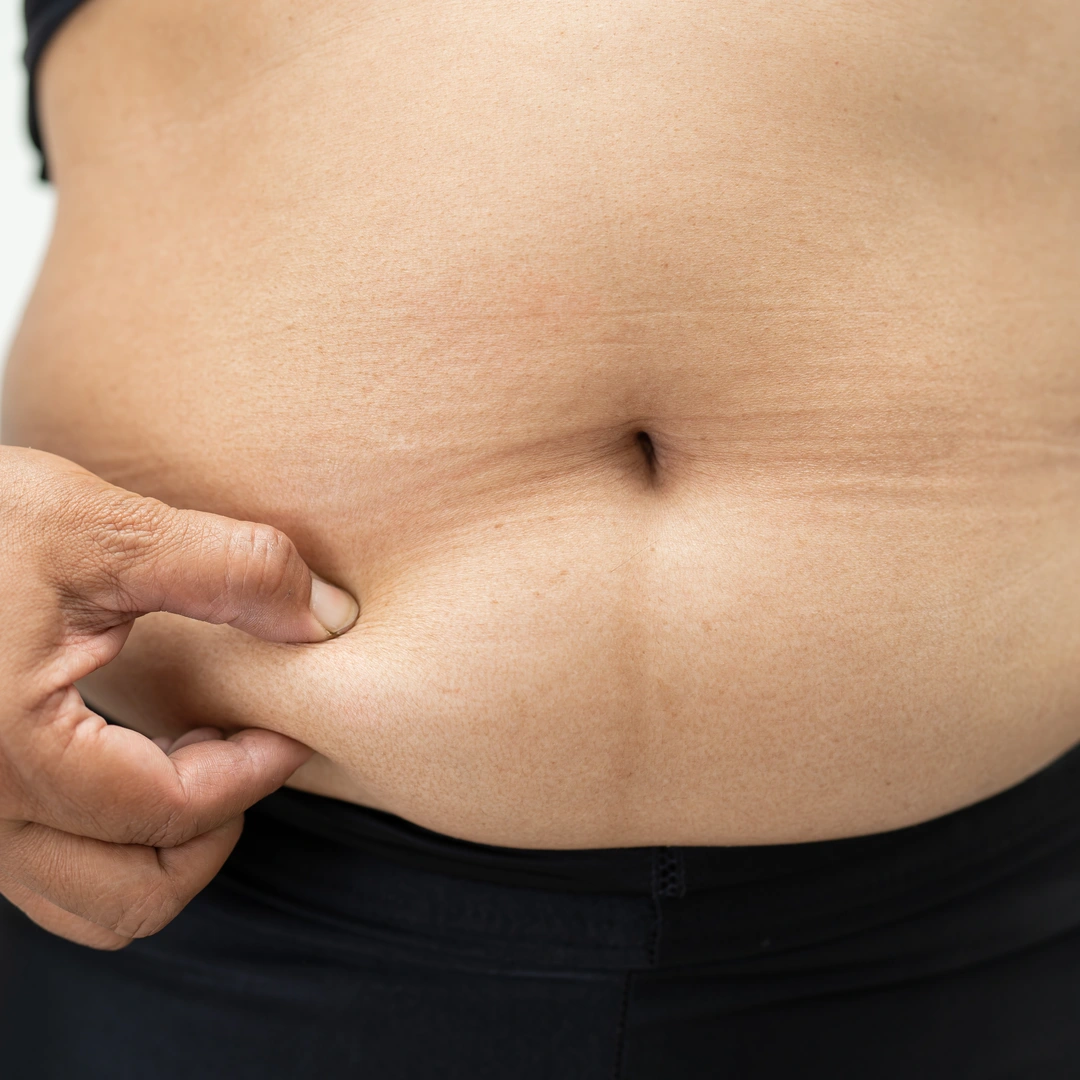 Not every tummy bulge is caused by superficial fat.
An abdominal prominence may also be related to:
- Visceral fat
- Bloating or digestive problems
- Diastasis recti
- Abdominal muscle weakness
- An umbilical or abdominal hernia
- Poor posture
- Scar tethering
- Loose skin
- Enlarged internal organs or another medical condition
A face-to-face examination may be needed to determine whether the concern is caused by skin, subcutaneous fat, muscle separation or the abdominal wall.
Endolift® and other aesthetic fat-reduction treatments cannot correct a hernia, significant diastasis recti or visceral fat.
Seek medical assessment if an abdominal bulge is painful, firm, enlarging, associated with vomiting or bowel symptoms, or cannot be gently reduced.
Endolift® for Stubborn Abdominal Fat
Endolift® is a minimally invasive laser treatment performed using a very fine optical fibre introduced beneath the skin.
Laser energy is delivered within the superficial subcutaneous layer to produce controlled heating. In appropriately selected patients, the treatment may help reduce small areas of superficial fat while stimulating tissue contraction and collagen remodelling.
This combination can be particularly helpful when a small fat pocket is accompanied by mild skin laxity.
Endolift® may be considered for:
- A small lower-abdominal fat pocket
- Mild fullness around the belly button
- Small areas of superficial, pinchable fat
- Mild to moderate abdominal skin laxity
- Reduced definition between the abdomen and waist
- A small bulge above a Caesarean-section scar
- Localised fat following stable weight loss
- Patients seeking fat reduction with simultaneous skin tightening
- Patients who do not require surgical liposuction or skin removal
Endolift® should be recommended with realistic expectations and careful consent.
What are the potential benefits of Endolift®?
Depending on the individual, potential benefits may include:
- Reduction of a small superficial fat pocket
- Improved lower-abdominal contour
- Mild skin contraction
- Improvement in early skin laxity
- Better definition around the waist or belly button
- Gradual collagen remodelling
- Small fibre entry points rather than surgical incisions
- Less recovery time than conventional liposuction
The degree of improvement varies and cannot be predicted precisely.
What Endolift® cannot do
Endolift® is not intended to:
Produce significant weight loss
- Treat obesity
- Remove visceral fat
- Correct a large or firm abdomen
- Repair muscle separation
- Repair an abdominal hernia
- Remove large quantities of fat
- Remove a substantial abdominal apron
- Correct severe loose skin
- Reproduce the results of liposuction or abdominoplasty
Where a patient has significant excess fat, extensive loose skin or abdominal muscle separation, surgery may provide a more appropriate and predictable result.
What Happens During Abdominal Endolift®?
Before treatment, the abdomen is examined and the treatment area is marked. Clinical photographs may be taken for the medical record and future comparison.
Local anaesthetic is used to improve comfort. A fine optical fibre is then introduced through small entry points and carefully moved within the planned superficial tissue layer.
Laser energy is delivered according to the thickness of the tissue, skin quality and treatment goals.
Treatment time varies according to whether the lower abdomen, central abdomen, flanks or full abdomen is being treated.
A compression garment may be recommended following treatment.
Endolift® Recovery and Results Timeline
Immediately after treatment
The abdomen may feel warm, tight, swollen or tender. Small entry-point dressings may be applied.
Days 1–7
Expected temporary effects can include:
- Swelling
- Bruising
- Tenderness
- Mild fluid leakage from entry points
- Temporary firmness
- Numbness or altered sensation
- Unevenness caused by swelling
- Discomfort when bending or exercising
Gentle walking is usually encouraged, although strenuous exercise may need to be avoided temporarily.
Weeks 2–4
Bruising and most visible swelling should gradually settle. Temporary firmness, numbness or localised swelling may continue.
Weeks 4–8
Early changes in contour and skin firmness may become easier to assess.
Months 3–6
Fat reduction and collagen-related tissue remodelling become more apparent. The abdomen may continue to feel firmer as the healing process progresses.
Months 6–12
Further gradual improvement may occur. Final results vary according to the volume of fat treated, skin quality, lifestyle and healing response.
Endolift® is commonly performed as one initial treatment. A second procedure may be considered after sufficient healing and clinical review, but it is not automatically required or suitable for everyone.
Risks of Abdominal Endolift®
Expected temporary effects include swelling, bruising, discomfort and altered sensation.
Less common or potentially significant risks include:
- Infection
- Burns or thermal injury
- Seroma or fluid collection
- Persistent numbness
- Prolonged swelling
- Fibrosis or firmness
- Contour irregularity
- Skin retraction in an undesired area
- Asymmetry
- Pigmentation changes
- Scarring
- Injury to nearby structures
- Insufficient fat reduction
- Worsening visibility of loose skin
- Need for further treatment or surgery
Removing fat from beneath skin that already has poor elasticity can sometimes make looseness or wrinkling more noticeable. Skin quality must therefore be assessed before treatment.
Other Evidence-Based Treatments for Stubborn Tummy Fat
Cryolipolysis or Fat Freezing
Cryolipolysis is a non-invasive treatment that uses controlled cooling to damage selected fat cells. The treated fat cells are gradually cleared through the body’s natural inflammatory processes.
The treatment is most suitable for a soft, pinchable fat pocket that fits appropriately within the applicator.
Systematic reviews have found that cryolipolysis can reduce local fat thickness and circumference, but it does not produce meaningful overall weight loss. Treatment outcomes vary by anatomical area, device and protocol.
Cryolipolysis may be considered for:
- Small, clearly defined fat pockets
- Lower-abdominal fullness
- Soft, pinchable subcutaneous fat
- Patients preferring a non-invasive procedure
- Patients with good skin elasticity
Limitations
Cryolipolysis does not provide significant skin tightening. It may therefore be less suitable where loose or crepey skin is already present.
Cryolipolysis recovery timeline
- Temporary redness, swelling or numbness may occur immediately.
- Tenderness, tingling or altered sensation can last several days or weeks.
- Early change may become visible after approximately six weeks.
- More complete results are generally assessed after approximately two to three months.
- More than one treatment cycle may be needed.
Important cryolipolysis risk
A rare complication called paradoxical adipose hyperplasia can cause the treated fat to enlarge and become firm rather than reduce. It usually develops several months after treatment and may require surgical correction.
The treatment should not be performed directly over or close to an existing hernia, abdominal wall weakness, surgical scar weakness or significant muscle separation.
High-Intensity Focused Ultrasound for Fat Reduction
Body-contouring HIFU uses focused ultrasound energy to heat and disrupt subcutaneous fat at a controlled depth.
This differs from facial HIFU, which may use different cartridges, depths and energy parameters.
Clinical research supports the ability of appropriately selected HIFU devices to target abdominal subcutaneous fat. However, results depend on sufficient fat thickness, correct treatment depth and the specific device used.
HIFU may be considered for:
- Small to moderate areas of abdominal fat
- Patients who prefer non-invasive treatment
- Patients with sufficient subcutaneous tissue depth
- Patients close to their preferred weight
HIFU limitations
HIFU may not be appropriate where the fat layer is extremely thin. It cannot treat visceral fat, hernia, muscle separation or severe loose skin.
Typical HIFU timeline
- One or two sessions may be recommended.
- Temporary tenderness, swelling or altered sensation may occur.
- The body gradually clears the disrupted fat cells.
- Results usually develop over approximately eight to twelve weeks.
- Further treatment is considered only after an appropriate review period.
Electromagnetic Muscle-Toning Treatments
High-intensity electromagnetic treatments stimulate repeated muscle contractions. Some technologies combine electromagnetic stimulation with radiofrequency heating.
They may be useful when reduced muscle tone contributes to poor abdominal definition.
Some trials report increased muscle thickness alongside modest reductions in measured fat thickness. However, published reviews have raised concerns about study quality, commercial conflicts and whether all reported changes are clinically meaningful. These technologies should not be relied upon as primary treatments for a discrete fat pocket.
These treatments may be considered for:
- Improving abdominal muscle tone
- Enhancing definition in suitable patients
- Supporting a broader exercise programme
- Patients with minimal fat and relatively good skin quality
They do not replace exercise, physiotherapy, weight management or surgical repair of significant diastasis recti.
Liposuction
Liposuction is a surgical procedure that physically removes subcutaneous fat through a cannula.
It remains the most direct and predictable treatment for larger or more clearly defined fat deposits. It can also be appropriate for some small, resistant areas where a patient wants a more substantial result than non-surgical treatments are likely to provide.
However, liposuction involves anaesthesia, incisions and greater recovery. It also carries surgical risks, including infection, bleeding, seroma, contour irregularity, pigmentation change, thrombosis and anaesthetic complications.
Liposuction reduces fat but does not reliably correct poor skin elasticity. Patients with significant loose skin may require skin removal rather than fat reduction alone.
Endolift® Versus Liposuction
Endolift® may be more appropriate for:
- Small, superficial fat pockets
- Mild skin laxity
- Patients seeking limited downtime
- Patients not requiring major fat removal
- Subtle, gradual contour improvement
Liposuction may be more appropriate for:
- Larger or deeper fat deposits
- Patients seeking a more substantial reduction
- Multiple areas requiring surgical contouring
- Cases where non-surgical treatment is unlikely to provide sufficient improvement
Endolift® cannot consistently reproduce the fat-removal capacity of liposuction however liposuction can not tighten the skin at the same time.
Can Stubborn Fat Return?
Fat cells that are permanently damaged or removed do not regenerate in exactly the same way. However, remaining fat cells can enlarge if weight is gained.
The abdomen can therefore become fuller again following:
- Weight gain
- Pregnancy
- Hormonal changes
- Reduced physical activity
- Age-related metabolic changes
Maintaining a stable weight is important for preserving the result.
Who May Be Suitable for Treatment?
A suitable candidate may:
- Have a small, localised pocket of abdominal fat
- Be close to a healthy or stable weight
- Have pinchable subcutaneous fat
- Have mild or moderate associated skin laxity
- Be in generally stable health
- Understand that treatment is not for weight loss
- Have realistic expectations
- Be willing to maintain a stable lifestyle
- Be able to follow all aftercare instructions
Treatment is often best planned once active weight loss has slowed and the patient is close to their intended target weight.
Who May Not Be Suitable?
Treatment may need to be postponed, modified or avoided in patients with:
- Pregnancy or breastfeeding
- Active infection or open wounds
- Active dermatitis or inflammatory skin disease
- Suspected abdominal or umbilical hernia
- Significant diastasis recti
- Abdominal wall weakness
- Severe obesity
- Predominantly visceral fat
- Severe loose or hanging skin
- Uncontrolled diabetes
- Significant immune suppression
- Impaired wound healing
- Bleeding disorders
- Unstable cardiovascular or systemic illness
- Previous abnormal or keloid scarring
- Unrealistic expectations
- Inability to follow aftercare
- An implanted device that is incompatible with the proposed energy treatment
Prescribed anticoagulants, antiplatelet medication or other medicines must not be stopped without advice from the prescribing clinician.
Procedure-specific contraindications also apply. For example, cold-related conditions may make cryolipolysis unsuitable, while implanted electronic devices may prevent treatment with certain radiofrequency or electromagnetic systems.
Treatment Timeline
Consultation
Your consultation includes assessment of:
- The location and thickness of the fat
- Skin quality and elasticity
- Stretch marks or crepey skin
- Scars and scar tethering
- Abdominal muscle tone
- Possible diastasis recti
- Possible hernia or abdominal wall weakness
- Weight stability
- Previous treatments and surgery
- Medical history and medication
A photographic review may provide useful initial guidance, but it cannot replace examination where abdominal wall weakness or a hernia is suspected.
Treatment day
The procedure is selected according to the nature of the fat pocket and the condition of the overlying skin.
First week
The degree of recovery depends on the treatment. Endolift® may cause swelling, bruising and tenderness, while non-invasive options may cause redness, sensitivity, firmness or temporary numbness.
Weeks 4–8
Early improvement may become visible, although swelling and the body’s natural clearance processes can affect the appearance.
Weeks 8–12
The result from most fat-reduction technologies becomes easier to assess.
Months 3–6
Endolift® tissue remodelling and skin tightening may continue. Further treatment should only be planned after adequate healing and clinical review.
Frequently Asked Questions
Can Endolift® remove a small tummy pouch?
Endolift® may improve a small area of superficial fat, particularly when mild skin laxity is also present. Suitability depends on whether the fullness is caused by subcutaneous fat rather than visceral fat, muscle separation or a hernia.
Is Endolift® a weight-loss treatment?
No. Endolift® is a body-contouring treatment for selected localised areas. It does not produce significant weight loss or treat obesity.
How much abdominal fat can Endolift® remove?
The treatment is intended for limited, superficial fat reduction rather than large-volume removal. The amount of change varies according to fat thickness, treatment area, energy delivery and individual response.
Will the treatment tighten loose skin?
Endolift® may provide some tissue contraction and gradual collagen remodelling. However, it cannot remove large amounts of loose skin or reproduce the effects of an abdominoplasty.
Which treatment is best for minimal tummy fat?
The most suitable option depends on:
- The thickness and location of the fat
- Whether the fat is soft and pinchable
- The degree of skin laxity
- Previous abdominal surgery
- The presence of scars
- The patient’s preferred recovery time
- The degree of improvement expected
Endolift® may be particularly useful when a small fat pocket and mild loose skin occur together.
Can Endolift® treat a Caesarean-section pouch?
Will exercise remove stubborn lower-abdominal fat?
Exercise and appropriate nutrition are essential for health and overall fat reduction. However, it is not possible to control precisely which fat stores the body uses first.
Body-contouring treatment may be considered for a small residual pocket once weight is stable.
How many Endolift® treatments will I need?
It is generally preferable to wait until weight is stable or approaching the intended target. Continued weight loss may alter the contour and make skin laxity more noticeable.
Are the results permanent?
Many patients undergo one initial procedure. A second treatment may be considered after several months if further improvement is appropriate.
A specific number of sessions cannot be guaranteed before assessing the abdomen and reviewing the response.
Book a Stubborn Tummy Fat Consultation
At Skin and Scar Care Clinic, we assess the skin, fat, scars and abdominal wall before recommending treatment.
Your consultation will help determine whether Endolift®, another non-surgical body-contouring treatment or surgical assessment is most likely to provide a safe and meaningful improvement.
Contact our Altrincham clinic to arrange your personalised abdominal contouring consultation.
Medical Disclaimer
The information on this page is provided for general education and does not replace a medical consultation, physical examination, diagnosis or personalised treatment advice.
An abdominal bulge may be caused by subcutaneous fat, visceral fat, muscle separation, scar tethering, hernia or another medical condition. These cannot always be distinguished accurately from photographs alone.
Endolift® and other body-contouring procedures are not treatments for obesity and are not substitutes for a balanced diet, regular physical activity or medical weight management.
All procedures carry risks. Depending on the treatment, these may include pain, swelling, bruising, burns, infection, numbness, pigmentation changes, contour irregularity, nodules, fibrosis, scarring, asymmetry, paradoxical fat enlargement and an unsatisfactory cosmetic outcome. Rare complications may require medical or surgical treatment.
Evidence for non-surgical body-contouring treatments varies between technologies. Some studies are small, uncontrolled or supported by device manufacturers. Treatment recommendations should therefore be based on individual assessment, available evidence, practitioner experience and realistic discussion of limitations.
The number of treatments, recovery time, degree of improvement and longevity vary between individuals. No specific outcome can be guaranteed.
Non-surgical treatment cannot reproduce the results of surgical liposuction, abdominoplasty or abdominal muscle repair. Where surgery is likely to be more appropriate, this will be explained during consultation.
At Skin and Scar Care Clinic, we provide 100% professional care and effort; however, individual treatment results cannot be guaranteed.