

Advanced, Personalised Acne Scar Treatment
Acne scarring can affect skin texture, confidence, and overall facial harmony long after active acne has settled. At Skin & Scar Care Clinic, we offer a comprehensive, medically led approach to acne scar improvement using advanced laser, injectable, regenerative, and precision scar-release techniques.
Acne scars are not all the same. Some are deep and narrow, some are broad and rolling, some are tethered beneath the skin, and others are associated with pigmentation, redness, or textural irregularity. For this reason, the best results are usually achieved with a bespoke combination treatment plan, rather than a single treatment. Combination approaches using subcision, TCA CROSS, fractional lasers, injectables, and collagen-stimulating therapies are widely recognised in acne scar management.
Types of Acne Scarring We Treat
Acne scars may include:
Ice-pick scars
Deep, narrow, pitted scars that extend into the skin.
Boxcar scars
Wider, sharply defined depressions with steep edges.
Rolling scars
Broad, wave-like depressions caused by tethering beneath the skin.
Tethered scars
Scars attached to deeper tissue by fibrous bands, often causing shadowing and uneven texture.
Atrophic scars
Indented scars caused by loss of collagen and tissue volume.
Post-inflammatory pigmentation
Brown marks or discolouration following acne inflammation.
Post-inflammatory redness
Persistent red marks caused by vascular inflammation after acne.
Treatments Offered
1. Subcision
Subcision is a minor surgical technique used to release fibrous bands underneath depressed or tethered acne scars. A fine needle or cannula is inserted beneath the skin to break the scar tissue pulling the skin down. DermNet describes subcision as a minor surgical procedure used for depressed scars and wrinkles, where the needle edge releases the fibrotic strands tethering the scar.
Best for:
- Rolling acne scars
- Tethered scars
- Depressed scars
- Scars that worsen with facial movement or lighting
- Broad uneven texture caused by underlying fibrosis
Benefits:
- Releases tethered scar tissue
- Improves skin smoothness
- Can stimulate collagen remodelling
- Often works well with Bio Remodelling / Bio Stimulator, PRF, PB Serum, or laser resurfacing
Downtime:
- Swelling and bruising are common
- Tenderness may last several days
- Results continue to improve gradually over weeks to months
2. Erbium Glass Laser 1550nm
The 1550nm Erbium Glass Laser is a non-ablative fractional laser used to improve acne scars, fine lines, pores, and skin texture with less downtime than fully ablative resurfacing.
It works by creating controlled microscopic thermal zones beneath the skin while preserving the surface layer. This stimulates collagen production and gradual skin remodelling.
Best for:
- Mild to moderate acne scars
- Textural irregularity
- Enlarged pores
- Early fine lines
- Patients wanting low downtime
- Maintenance after CO₂ laser or subcision
Benefits:
- Minimal downtime
- Suitable for progressive collagen stimulation
- Improves texture and tone
- Can be used as part of a staged acne scar protocol
Typical course:
- 3–4 sessions
- Usually spaced 4–6 weeks apart
3. Bio Remodelling / Bio Stimulator / PRF Skin Regeneration
Bio Remodelling / Bio Stimulator®
Bio Remodelling / Bio Stimulator is a hyaluronic-acid-based bioremodelling treatment designed to improve skin hydration, elasticity, and quality. While it does not physically remove acne scars, it can help improve the overall quality of scarred skin and may be useful after scar-release or laser treatments.
PRF — Platelet-Rich Fibrin
PRF uses your own blood-derived growth factors to support healing, collagen stimulation, and tissue repair. It may be used after subcision, laser, or collagenase-based treatments to encourage smoother healing and skin regeneration.
Best for:
- Crepey or thin scarred skin
- Mild atrophic scarring
- Skin quality improvement
- Supporting healing after subcision or laser
- Patients wanting regenerative treatment options
Benefits:
- Improves hydration and elasticity
- Supports collagen production
- Can complement scar-release treatments
- Useful as part of combination therapy
4. Fractional CO₂ Laser
Fractional CO₂ laser is one of the most effective resurfacing treatments for acne scarring. It creates controlled microscopic columns of ablation in the skin, encouraging collagen remodelling and resurfacing.
Laser resurfacing aims to blend scars into surrounding skin by smoothing scar edges and stimulating new collagen. Both ablative and non-ablative fractional lasers are recognised treatment options for acne scarring.
Best for:
- Boxcar scars
- Textural acne scarring
- Enlarged pores
- Uneven skin surface
- Superficial to moderate atrophic scars
- Patients wanting stronger resurfacing
Benefits:
- Powerful skin resurfacing
- Improves texture and scar edges
- Stimulates collagen
- Can improve pores and fine lines at the same time
Downtime:
- Redness, swelling, heat, peeling, and crusting are expected
- Downtime is usually around 5–10 days depending on treatment intensity
- Redness may persist longer in some patients
Important:
CO₂ laser may not be suitable during periods of high sun exposure or for patients unable to follow strict aftercare. Patients with darker skin types may have a higher risk of post-inflammatory pigmentation, so settings and preparation must be carefully personalised.
5. Collagenase Injection / PB Serum
PB Serum collagenase-based treatment is used in selected cases where acne scars are associated with fibrosis, tethering, or hardened scar tissue. Collagenase works by targeting abnormal collagen and fibrotic tissue, helping to soften scars and support remodelling. PB Serum has emerging evidence and product ranges aimed at acne scars and scar remodelling.
Best for:
- Fibrotic acne scars
- Tethered scars
- Hardened scar tissue
- Scars not responding fully to laser alone
- Combination protocols with subcision or laser
Benefits:
- Helps soften fibrotic tissue
- Can improve scar pliability
- May enhance results when combined with subcision and resurfacing
- Useful in selected resistant scars
Important:
This is a specialist treatment and requires careful patient selection. It is not suitable for all acne scars and is not used as a general skin booster.
6. TCA CROSS
CO₂ laser can be used on the abdomen to improve skin texture, mild laxity, and stretch marks, especially after pregnancy, weight loss, or previous surgery.
It can help improve:
- Stretch marks
- Crepey abdominal skin
- Mild skin laxity
- Post-pregnancy skin texture
- Post-weight-loss skin changes
- Tummy tuck scar texture
- Uneven skin quality
For significant abdominal laxity, CO₂ laser alone may not be enough. Combination treatment with Endolift®, RF microneedling, Bio Remodelling / Bio Stimulator® Body, polynucleotides, or surgical correction may be discussed.
Ideal Candidates
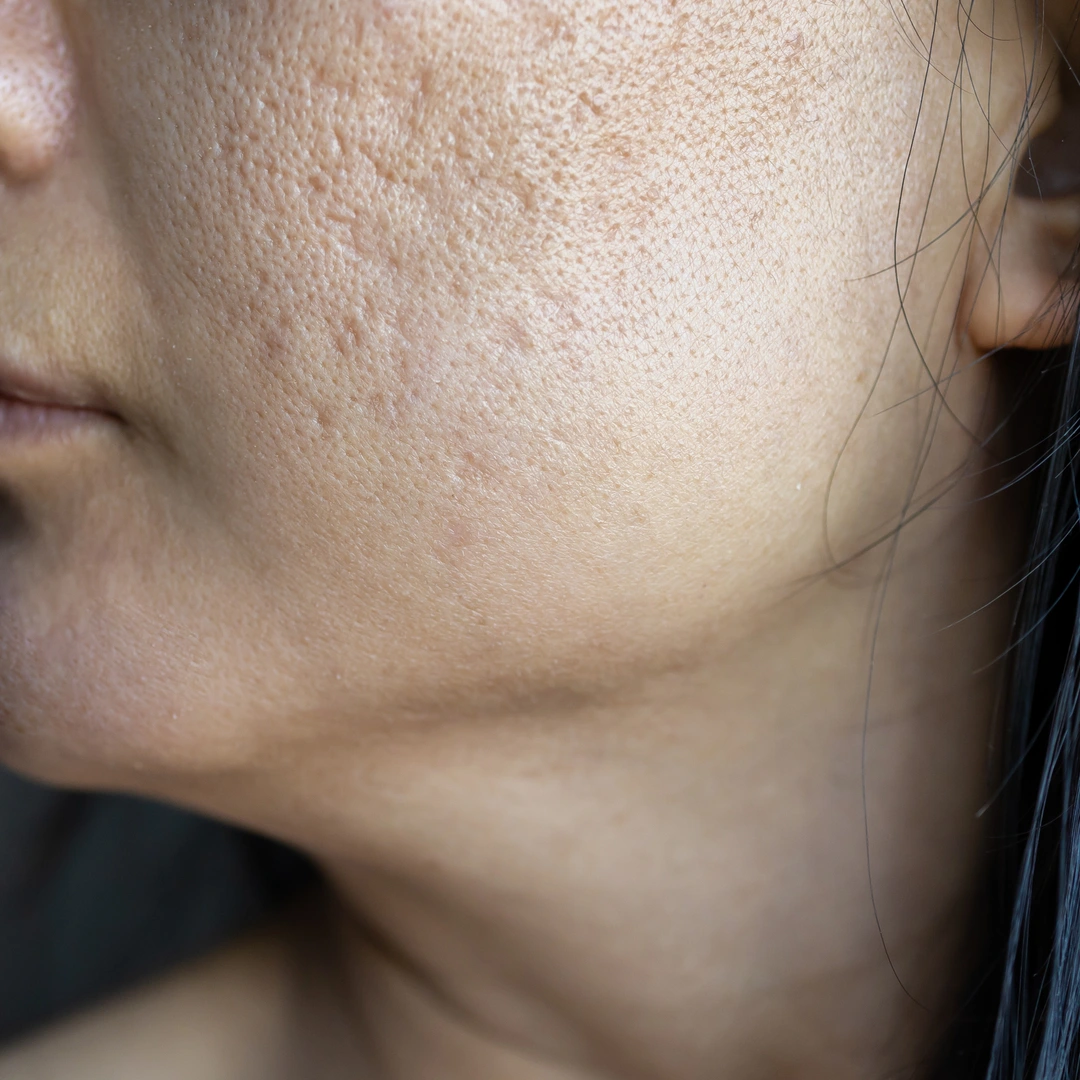
Acne scar treatment may be suitable for patients who:
- Have atrophic, pitted, rolling, boxcar, or ice-pick acne scars.
- Have stable or well-controlled acne.
- Want improvement in skin texture and confidence.
- Understand that multiple sessions are usually required.
- Are willing to follow sun protection and aftercare advice.
- Have realistic expectations.
- Are suitable for laser, injectable, or chemical reconstruction treatments after medical assessment.
The most important first step is controlling active acne. Treating scars while acne is still active can lead to new scars forming and reduce the overall success of treatment.
Who May Not Be Suitable?
Treatment may not be suitable, or may need to be delayed, if you:
- Have active, uncontrolled acne.
- Are pregnant or breastfeeding.
- Have active cold sores or skin infection in the treatment area.
- Have recently used isotretinoin, depending on the treatment planned and medical assessment.
- Have a history of keloid or hypertrophic scarring.
- Have uncontrolled diabetes or impaired wound healing.
- Are unable to avoid sun exposure after treatment.
- Have recently tanned or used sunbeds.
- Have unrealistic expectations.
- Are taking certain medications that affect healing or bleeding.
- Have active eczema, dermatitis, or inflammatory skin disease in the treatment area.
Suitability is confirmed during consultation.
Limitations of Acne Scar Treatment
Acne scar treatment can significantly improve skin texture, shadowing, and scar visibility, but it cannot always remove scars completely.
Important limitations include:
- Multiple treatments are often required.
- Deep scars may improve but not disappear.
- Ice-pick scars can be resistant.
- Pigmentation may relapse, especially with sun exposure.
- Results vary depending on skin type, scar type, age, collagen response, and aftercare.
- Some scars need staged treatments rather than one procedure.
- Maintenance may be required.
- Active acne must be controlled to prevent new scarring.
Acne scar improvement is usually gradual because collagen remodelling takes time.
Combination Treatments
Rolling / tethered scars
Often treated with:
- Subcision
- PRF or Bio Remodelling / Bio Stimulator
- PB Serum collagenase in selected fibrotic scars
- Erbium Glass or CO₂ laser resurfacing
Ice-pick scars
Often treated with:
- TCA CROSS
- CO₂ laser
- Pico or pigmentation laser if pigmentation is present
Boxcar scars
Often treated with:
- CO₂ laser
- Erbium Glass laser
- TCA CROSS for narrow scars
- Subcision if tethered
Mixed acne scarring
Often treated with:
- Subcision
- TCA CROSS
- CO₂ laser
- Erbium Glass laser
- PRF / Bio Remodelling / Bio Stimulator
- Collagenase injection for selected fibrotic scars
This tailored approach is important because acne scars are rarely one single type.
Your Treatment Journey
1. Consultation and Scar Mapping
Your journey begins with a detailed consultation. We assess:
- Scar type
- Scar depth
- Skin type
- Active acne status
- Pigmentation risk
- Previous treatments
- Medical history
- Lifestyle and downtime availability
- Expectations and treatment goals
- Clinical photographs may be taken to document your baseline.
2. Personalised Treatment Plan
You will receive a bespoke plan based on your scar pattern. This may include one treatment or a combination protocol. For example:
- Subcision for tethered rolling scars.
- TCA CROSS for ice-pick scars.
- CO₂ laser for texture and boxcar scars.
- Erbium Glass laser for collagen stimulation and lower-downtime resurfacing.
- PRF or Bio Remodelling / Bio Stimulator for skin quality.
- PB Serum collagenase for selected fibrotic scars.
3. Preparation
Before treatment, you may be advised to:
- Avoid sun exposure.
- Stop active retinoids or exfoliating acids for a short period.
- Use pigment-suppressing skincare if at risk of hyperpigmentation.
- Start antiviral medication if prone to cold sores.
- Avoid certain blood-thinning medication or supplements if appropriate and medically safe.
- Ensure active acne is controlled.
4. Treatment Sessions
Treatment sessions depend on the modality used.
Some treatments, such as subcision or CO₂ laser, may require numbing cream or local anaesthetic. TCA CROSS is performed precisely on individual scars. Erbium Glass laser usually has lower downtime. PRF requires a blood sample before preparation and injection.
5. Healing and Review
Healing varies depending on treatment intensity. We review your progress and adjust your treatment plan if required.
6. Maintenance and Long-Term Skin Health
Once scars have improved, maintenance may include:
- Erbium Glass laser
- Skin boosters
- PRF
- Medical-grade skincare
- Sun protection
- Acne control
- Pigmentation management
Results You Can Expect ?
Results vary from person to person. Most patients can expect gradual improvement rather than instant correction.
Possible improvements include:
- Softer scars
- Reduced depth of pitted scars
- Improved skin texture
- Less shadowing
- Better skin quality
- Smoother complexion
- Improved confidence
- Reduced pigmentation or redness when treated appropriately
Collagen remodelling usually continues for several months after treatment. A realistic expectation is improvement, not complete scar removal. Many patients require a staged plan over several months.
Key Benefits
- Medically led acne scar assessment
- Bespoke treatment planning
- Multiple advanced treatment options
- Combination approach for mixed scars
- Suitable options for different scar types
- Minimal to advanced downtime options
- Focus on natural-looking skin improvement
- Treatment tailored to skin type and pigmentation risk
- Long-term skin quality improvement
- Supportive aftercare and review process
Aftercare Advice
Aftercare will depend on your treatment, but general advice includes:
- Avoid sun exposure.
- Use SPF 50 daily.
- Avoid sunbeds.
- Do not pick scabs or peeling skin.
- Avoid active skincare such as retinoids, acids, and exfoliants until advised.
- Use gentle cleanser and moisturiser.
- Avoid makeup for the advised period after resurfacing or TCA CROSS.
- Avoid strenuous exercise, sauna, steam rooms, and swimming for 24–72 hours, or longer after more intensive treatments.
- Keep the skin clean and hydrated.
- Use antiviral medication if prescribed.
- Contact the clinic if you develop unusual pain, blistering, pus, worsening redness, or signs of infection.
Strict sun protection is essential to reduce the risk of pigmentation after laser or chemical scar treatments.
Treatment Summary
| Treatment | Best For | Sessions | Downtime |
| Subcision | Rolling and tethered scars | 1–3 | Bruising/swelling for several days |
| Erbium Glass Laser 1550nm | Texture, pores, mild to moderate scars | 3–4 | Low to moderate |
| Bio Remodelling / Bio Stimulator / PRF | Skin quality, collagen support, healing | 2–4 | Minimal to mild |
| CO₂ Laser | Boxcar scars, texture, resurfacing | 1–3 | Moderate to significant |
| PB Serum Collagenase | Fibrotic or tethered scars | Case-dependent | Mild to moderate |
| TCA CROSS | Ice-pick and narrow boxcar scars | 3–6 | Small scabs for several days |
Frequently Asked Questions
Important Disclaimer
Skin & Scar Care Clinic is a medical-grade clinic providing advanced acne scar treatments with a personalised and safety-focused approach.
We guarantee our expertise, clinical judgement, and best efforts; however, specific results cannot be guaranteed. Outcomes vary depending on scar type, scar depth, skin type, age, collagen response, pigmentation tendency, active acne control, lifestyle factors, and compliance with aftercare.
Acne scar treatment usually requires multiple sessions and combination therapy. The goal is improvement in scar appearance, skin texture, and skin quality rather than complete removal of all scars. Pigmentation, redness, bruising, swelling, infection, scarring, recurrence, and incomplete response are possible risks and will be discussed during consultation.
Following a recent consultation with Mr Salahuddin to discuss various aesthetic treatments, including ebrium laser, c02 laser and endolift. I had my first session of ebrium laser treatment today. I can honestly say Mr Salahuddin's approach is excellent! He was very informative and went into great detail about each treatment, whilst remaining courteous, honest and professional at all times. We worked out a plan 'together' and he helped with any concerns I had. I am excited to start my journey with him and I have more than 100% faith in his ability as a medical professional to give me the results I want to achieve. I would highly recommend Mr Salahuddin, his expertise is second to none.
Joan Loudon