

Thread Vein Treatment
Specialist Treatment for Facial Thread Veins, Redness and Visible Broken Capillaries
Thread veins are small visible blood vessels that appear close to the surface of the skin. They are also known as telangiectasia, spider veins, broken capillaries or facial red veins.
They commonly appear on the cheeks, nose, chin and around the nostrils. They may look like fine red lines, small branching vessels, red patches or a network of tiny visible veins.
At Skin and Scar Care Clinic, we offer a personalised approach to thread vein treatment using medical-grade skincare, sun protection, redness control and targeted laser or light-based treatments such as DPL/IPL, 980nm diode laser, Long-Pulsed Nd laser, KTP laser and other vascular laser options where appropriate.
The aim is to reduce visible vessels, improve redness, calm the skin and create a clearer, more even complexion.
What Are Thread Veins?
Thread veins are small, widened blood vessels that become visible on the surface of the skin. On the face, they often appear as fine red lines or branching vessels. They may be isolated or part of a wider redness pattern.
They are usually harmless, but many patients find them cosmetically frustrating because they can make the skin look flushed, uneven or persistently red.
Thread veins may appear as:
- Fine red lines
- Small branching veins
- Broken capillaries
- Red patches around the nose
- Visible vessels on the cheeks
- Spider-like red marks
- Background redness with visible vessels
- Persistent redness after flushing
Where Do Thread Veins Commonly Appear?
Facial thread veins are most commonly seen on:
- Nose
- Cheeks
- Chin
- Around the nostrils
- Upper lip area
- Jawline
- Forehead in some cases
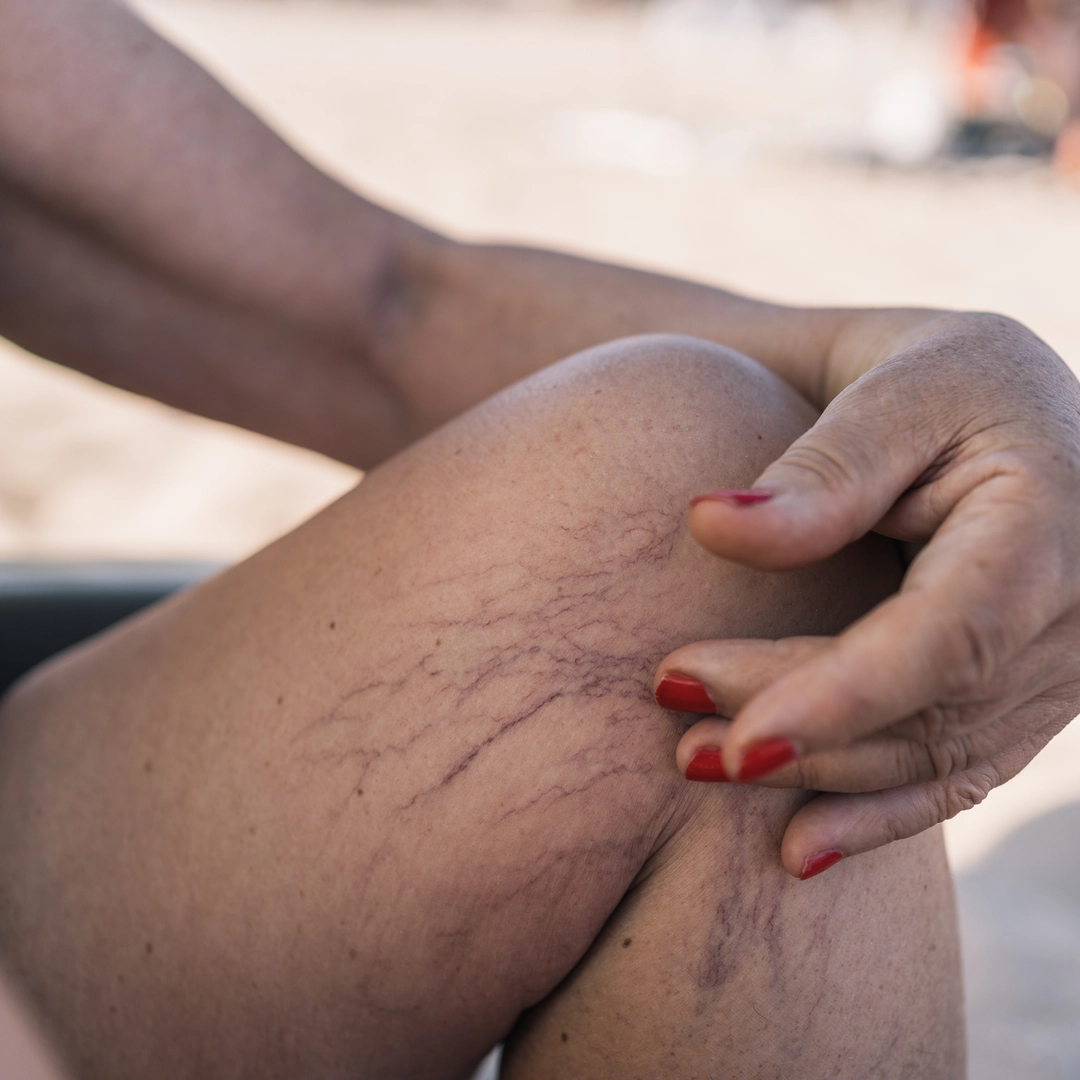
Thread veins can also appear on the legs, but leg thread veins are different from facial vessels and may need vascular assessment, compression advice or sclerotherapy depending on the pattern and symptoms.
This page mainly focuses on facial thread veins and redness.
What Causes Thread Veins?
Thread veins can develop for many reasons. Often, there is not one single cause but a combination of skin sensitivity, genetics, sun exposure, vascular changes and lifestyle triggers.
Common causes and contributing factors include:
1. Sun Exposure
UV exposure weakens the skin and can damage small blood vessels over time. This is one of the most common factors linked with facial thread veins and redness.
2. Rosacea and Facial Flushing
People with rosacea or repeated facial flushing are more likely to develop persistent redness and visible vessels. Over time, repeated widening of blood vessels may make them more noticeable.
3. Ageing
As the skin becomes thinner and collagen support reduces, small vessels may become more visible.
4. Genetics
Some people are naturally more prone to visible facial vessels, redness or flushing.
5. Sensitive Skin
Reactive skin is more likely to flush and become inflamed, which may contribute to long-term redness and visible vessels.
6. Weather and Temperature Changes
Cold wind, heat, saunas, steam rooms and sudden temperature changes can trigger flushing and make vessels more visible.
7. Alcohol and Spicy Foods
Alcohol and spicy foods can trigger facial flushing in some people, particularly those with rosacea-prone or redness-prone skin.
8. Skin Trauma
Picking, squeezing, injury, surgery, aggressive exfoliation or harsh cosmetic treatments may contribute to broken capillaries.
9. Hormonal Changes
Pregnancy, menopause and hormonal changes may make facial vessels more visible in some patients.
10. Topical Steroid Misuse
Using steroid creams on the face without medical supervision can thin the skin and contribute to visible vessels, redness and sensitivity.
Are Thread Veins Dangerous?
Facial thread veins are usually harmless and do not normally indicate a serious medical problem. However, if redness is sudden, painful, spreading, associated with swelling, bleeding, ulceration or a changing lesion, medical assessment is recommended.
For leg veins, symptoms such as aching, swelling, heaviness, skin changes or varicose veins may require vascular assessment before cosmetic treatment.
Thread Veins and Rosacea
 Thread veins often occur alongside rosacea or flushing-prone skin.
Rosacea-related thread veins may be associated with:
- Facial flushing
- Persistent redness
- Burning or stinging
- Sensitive skin
- Red bumps or pustules
- Visible vessels on the cheeks and nose
- Worsening with heat, alcohol or spicy food
In these cases, treatment usually needs to address both the visible vessels and the underlying skin sensitivity.
Skincare for Thread Veins and Redness
Skincare cannot usually remove established thread veins, but it can protect the skin, reduce irritation and help prevent redness from worsening.
A gentle, consistent routine is important.
Morning Routine
Gentle Cleanser
Use a mild cleanser that does not strip the skin. Avoid scrubs, cleansing brushes and harsh foaming cleansers if your skin is red or sensitive.
Azelaic Acid if Suitable
Azelaic acid can be useful if thread veins are associated with redness, rosacea-prone skin, inflammation or post-inflammatory marks.
It does not physically remove thread veins, but it may help calm redness and improve skin tone in suitable patients.
Barrier-Supporting Moisturiser
A light, calming moisturiser can help reduce dryness, irritation and sensitivity.
Tinted Suncream
Daily SPF is one of the most important steps for thread vein and redness-prone skin.
A tinted SPF 30 or SPF 50 may be particularly helpful because it protects the skin while visually reducing redness. Tinted suncreams can also make thread veins appear less obvious during the day.
Ingredients to Avoid or Use Carefully
If you have thread veins or redness-prone skin, the following may worsen irritation:
- Harsh scrubs
- Strong exfoliating acids
- Alcohol-based toners
- Fragrance
- Essential oils
- Aggressive peels
- Overuse of retinoids
- Strong vitamin C formulas
- Hot water cleansing
- Frequent product changes
- Unsupervised steroid creams on the face
A simple routine is often better than using too many active products.
Topical Treatments
Tinted Suncream
Tinted Suncream
Tinted suncream is not just cosmetic. It protects the skin from UV exposure and helps reduce the visible appearance of redness.
Benefits include:
- Helps protect against UV-related vascular damage
- Visually reduces redness
- Helps camouflage thread veins
- Supports rosacea-prone skin
- Reduces risk of pigmentation after laser
- Helps maintain laser results
Daily SPF is recommended even in winter, especially if you are having laser or light treatment.
Azelaic Acid
Azelaic acid may be helpful when thread veins are associated with redness, rosacea, inflammation or uneven tone.
Benefits may include:
- Calming redness
- Reducing inflammation
- Supporting rosacea-prone skin
- Improving uneven tone
- Helping post-inflammatory marks
- Supporting sensitive acne-rosacea overlap
Azelaic acid should be introduced gradually. It can sometimes cause tingling, dryness or irritation at the start.
Laser and Light-Based Treatments for Thread Veins
Established thread veins usually need targeted energy-based treatment to reduce their appearance.
The principle is simple: vascular lasers and light-based treatments target the red colour within the blood vessel. The energy heats the vessel wall, causing the visible vessel to shrink, close or gradually fade as the body clears it.
The best treatment depends on:
- Vessel size
- Vessel depth
- Vessel colour
- Location
- Skin type
- Background redness
- Rosacea tendency
- Sensitivity
- Previous treatment history
980nm Laser for Facial Thread Veins
- Small visible facial vessels
- Localised thread veins
- Red veins around the nose
- Small vascular lesions
- Resistant vessels not fully improved with DPL/IPL
- Targets individual visible vessels
- Useful for localised thread veins
- Precise treatment
- Minimal downtime for many patients
- Can be combined with DPL for background redness
Long-Pulsed Nd Laser
Long-Pulsed Nd laser may be used for deeper or larger vessels in selected cases. It penetrates deeper than some superficial vascular lasers, so it can be helpful when vessels are not responding to more superficial treatment.
It must be used carefully on the face, particularly in sensitive or darker skin types.
It may help with:
- Deeper facial vessels
- Larger resistant thread veins
- Selected vascular lesions
- Vessels around the nose or cheeks
KTP Laser
KTP laser is commonly used for small superficial red vessels. It can be helpful for fine facial thread veins and small red vascular lesions in suitable skin types.
It may help with:
- Fine red vessels
- Superficial facial veins
- Small red spots
- Spider-like facial vessels
DPL 590nm for Redness and Vascular Changes
DPL 590nm can be used to target redness and superficial vascular changes.
It may help with:
- Red cheeks
- Facial flushing
- Rosacea-prone redness
- Fine superficial vessels
- Visible capillary networks
- Uneven red tone
DPL 480nm for Inflammation and Acne-Rosacea Overlap
DPL 480nm may be considered when thread veins occur alongside inflammatory redness, acne-prone redness or rosacea-type bumps.
It may help with:
- Inflamed redness
- Reactive skin
- Acne-rosacea overlap
- Red post-acne marks
- Calmer-looking skin tone
Pulsed Dye Laser
Pulsed Dye Laser is a well-established vascular laser that targets red blood vessels. It may be used for facial redness, rosacea-related redness, telangiectasia and certain vascular lesions.
It may help with:
- Persistent redness
- Fine visible vessels
- Rosacea-related vascular changes
- Vascular birthmarks in specialist settings
Electrocautery / Electrodessication
In some cases, very small individual vessels may be treated with electrocautery or electrodessication. This uses controlled heat to treat tiny vessels.
It may be useful for selected isolated vessels but is not usually the first choice for widespread redness.
Sclerotherapy
Sclerotherapy is commonly used for leg thread veins. It involves injecting a solution into the vessel to close it.
Sclerotherapy is not usually used for facial thread veins at aesthetic skin clinics. If you have leg veins, varicose veins, swelling, aching or heaviness, a vascular assessment may be more appropriate.
Which Treatment Is Best for Thread Veins?
There is no single best treatment for every patient.
A general approach may be:
- DPL/IPL for diffuse redness and fine superficial vessels
- 980nm laser for selected individual facial vessels
- KTP laser for fine superficial red vessels
- Pulsed Dye Laser for redness and vascular lesions
- Long-Pulsed Nd laser for deeper or larger vessels
- Sclerotherapy for selected leg thread veins under vascular care
- Skincare and SPF for prevention, maintenance and redness control
Your practitioner will recommend the safest and most suitable option after assessing your skin and vessels.
Treatment Timeline
Thread vein treatment is gradual. The number of sessions depends on how many vessels are present, how deep they are, how sensitive the skin is and whether redness or rosacea is also present.
Week 0: Consultation and Assessment
Your practitioner will assess:
- Vessel size
- Vessel depth
- Redness pattern
- Skin type
- Rosacea tendency
- Sensitivity
- Pigmentation risk
- Medical history
- Medication use
- Previous treatments
- Sun exposure
- Whether a test patch is needed
A personalised treatment plan will then be recommended.
Weeks 0–2: Skin Preparation
Before treatment, the focus is on calming and protecting the skin.
This may include:
- Gentle cleanser
- Barrier-supporting moisturiser
- Daily tinted SPF
- Avoiding tanning
- Avoiding harsh skincare
- Introducing azelaic acid if suitable
- Avoiding active flare-ups before laser
For very reactive skin, we may stabilise the skin first before laser treatment.
Weeks 2–12: Active Treatment Phase
A typical course may include:
1–3 sessions for individual visible vessels
or
3–6 sessions for wider redness, rosacea-prone skin or multiple fine vessels
Sessions are usually spaced:
3–6 weeks apart
The exact spacing depends on the laser used, treatment intensity and healing response.
After Each Session
You may notice:
- Temporary redness
- Warmth
- Mild swelling
- Darkening of treated vessels
- Slight crusting in small areas
- Gradual fading over days to weeks
Some vessels may disappear quickly, while others fade gradually or need repeat treatment.
Months 3–6: Review and Maintenance
After the initial course, we review:
- Remaining visible vessels
- Background redness
- Flushing tendency
- Skincare routine
- SPF use
- Need for maintenance treatment
Some patients only need occasional top-ups. Others with rosacea, flushing or sun damage may need maintenance sessions.
Maintenance
Thread veins can improve with treatment, but new vessels may develop over time, especially if the underlying triggers continue.
Maintenance may include:
- Daily SPF
- Tinted suncream
- Gentle skincare
- Avoiding harsh products
- Managing rosacea and flushing
- Avoiding excessive heat exposure
- DPL maintenance every 3–6 months if redness-prone
- Laser top-up for new visible vessels as required
What Results Can You Expect?
Treatment may help improve:
- Visible facial thread veins
- Broken capillaries
- Red veins around the nose
- Background redness
- Facial flushing appearance
- Uneven tone
- Red patches
- Skin confidence
- Need for heavy makeup or concealer
Results vary. Some vessels respond quickly, while others need several sessions. New vessels can appear in the future, especially in redness-prone or rosacea-prone skin.
Before & After
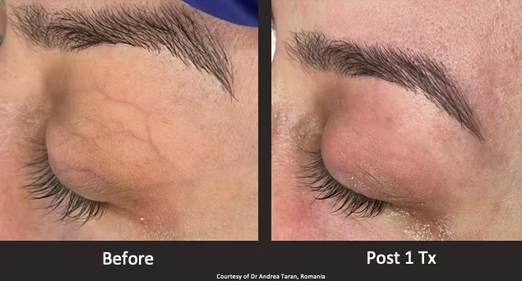
Eye veins
LP-ND Yag lasers for removal of veins

Rosacea Treatment
Rosacea treatment with siginfcant improvement after 4 sessions of Alma Dye-VL laser
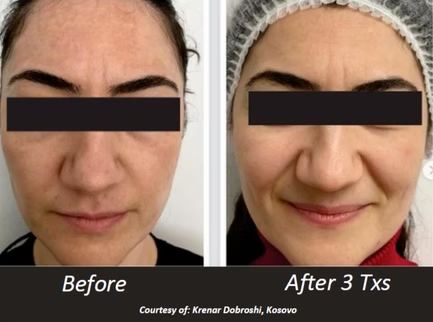
Pigmentation improvement
Rosacea Treatment
Rosacea treatment with siginfcant improvement after 4 sessions of Alma Dye-VL laser
Thread Veins
Laser Improvement of thread veins single session
Frequently Asked Questions
Thread veins are tiny visible blood vessels near the surface of the skin. They are also called telangiectasia, spider veins or broken capillaries.
Yes, the terms are often used to describe the same concern: small visible surface vessels on the face or body.
Common causes include sun exposure, rosacea, ageing, genetics, sensitive skin, repeated flushing, trauma, hormonal changes and steroid cream misuse.
Skincare cannot usually remove established thread veins. However, good skincare, SPF and redness control can help prevent worsening and support laser results.
No. Azelaic acid does not physically remove vessels, but it may help reduce redness, inflammation and rosacea-related sensitivity.
Yes. Tinted suncream protects the skin and can visually reduce redness, making thread veins look less noticeable.
There is no single best laser for everyone. DPL/IPL, 980nm laser, KTP laser, Pulsed Dye Laser and Long-Pulsed Nd laser may all be useful depending on the vessel and skin type.
Yes, 980nm laser can be useful for selected individual facial vessels, especially localised thread veins around the nose or cheeks.
DPL can be very useful for diffuse redness, fine superficial vessels and rosacea-related vascular redness. More prominent individual vessels may need targeted laser.
Some individual vessels may improve in 1–3 sessions. Widespread redness or multiple fine vessels often need 3–6 sessions.
Sessions are usually spaced 3–6 weeks apart depending on the treatment used and how the skin responds.
Most patients describe the sensation as heat, snapping or mild stinging. Cooling may be used to improve comfort.
Downtime is usually mild. You may have redness, warmth, swelling, vessel darkening or small crusts for a few days depending on the treatment.
Treated vessels may improve significantly, but new vessels can appear over time. Rosacea, sun damage, flushing and genetics can increase the chance of recurrence.
This depends on the treatment intensity and skin response. Mineral makeup may be allowed after mild treatment, but you may be advised to avoid makeup for 24–48 hours if the skin is sensitive.
Yes, but treatment must be planned carefully. Some lasers and settings carry a higher risk of pigmentation changes in darker skin tones, so a test patch may be recommended.
Leg thread veins are different from facial thread veins. They may require vascular assessment, sclerotherapy or a different treatment pathway, especially if there are varicose veins, swelling or aching.
Facial thread veins are usually harmless. However, rapidly changing, bleeding, painful or unusual lesions should be assessed medically.
You cannot always prevent them, but daily SPF, avoiding tanning, managing flushing, gentle skincare and avoiding unnecessary trauma can help reduce worsening.
Yes. Many patients with rosacea-related thread veins benefit from a combination of skincare, SPF, DPL/IPL and selected vascular laser treatment.
Safety and Medical Disclaimer
Thread vein treatment is subject to consultation, skin assessment, suitability and informed consent.
Facial thread veins are usually harmless, but any unusual, bleeding, rapidly changing, painful or uncertain lesion may require medical assessment before treatment.
Laser, DPL, IPL, electrocautery and vascular treatments may cause temporary redness, swelling, warmth, bruising, crusting, blistering, pigmentation changes, burns, infection, scarring, incomplete clearance or recurrence of vessels.
Patients with darker skin tones, active tanning, melasma, photosensitivity, pregnancy, breastfeeding, active infection, recent isotretinoin use, certain medical conditions or certain medications may require special precautions or may not be suitable for some treatments.
Thread veins can improve significantly, but new vessels may appear over time. Results vary depending on vessel size, vessel depth, skin type, rosacea tendency, sun exposure, genetics, lifestyle and aftercare compliance.
No treatment outcome can be guaranteed.
Following a recent consultation with Mr Salahuddin to discuss various aesthetic treatments, including ebrium laser, c02 laser and endolift. I had my first session of ebrium laser treatment today. I can honestly say Mr Salahuddin's approach is excellent! He was very informative and went into great detail about each treatment, whilst remaining courteous, honest and professional at all times. We worked out a plan 'together' and he helped with any concerns I had. I am excited to start my journey with him and I have more than 100% faith in his ability as a medical professional to give me the results I want to achieve. I would highly recommend Mr Salahuddin, his expertise is second to none.
Joan Loudon