

Advanced Hair Restoration Programme
At Skin & Scar Care Clinic, we offer a personalised, medical-led approach to hair restoration using a combination of evidence-based and regenerative treatments. Hair loss can occur due to genetics, hormones, stress, ageing, inflammation, autoimmune conditions, nutritional deficiencies, or scalp health concerns. Because every patient is different, we begin with a detailed consultation to assess the type and cause of hair loss before recommending a tailored treatment plan.
Our combination approach may include topical Minoxidil, Finasteride where clinically appropriate, Erbium Glass Laser, 658nm Low-Level Laser Therapy, PRF, Carboxytherapy, and steroid injections for selected inflammatory or patchy hair-loss conditions.
Minoxidil and Finasteride are recognised treatments for pattern hair loss, while local steroid injections may be used for selected cases of alopecia areata under medical supervision. (Royal Berkshire NHS Foundation Trust)
Ideal For:
This treatment programme may be suitable for patients experiencing:
- Male or female pattern hair loss
- Thinning hair or reduced hair density
- Early-stage hair shedding
- Hair miniaturisation
- Weak or ageing hair follicles
- Post-stress or post-illness hair shedding
- Scalp inflammation affecting hair growth
- Patchy alopecia areata, where steroid injection is clinically appropriate
- Patients wanting to strengthen existing hair and slow progression
Who May Not Be Suitable
This treatment may not be suitable for patients with:
- Active scalp infection
- Uncontrolled medical conditions
- Pregnancy or breastfeeding
- Known allergy to any treatment ingredients
- Certain hormonal or autoimmune conditions requiring specialist management first
- Advanced baldness where hair transplant may be more appropriate
- Unrealistic expectations
- Patients unable to commit to a treatment course and maintenance plan
Finasteride is not suitable during pregnancy or breastfeeding and is generally used with caution in women, particularly those who may become pregnant. (Gloucestershire Hospitals NHS Trust)
Treatment Options
Topical Minoxidil
Minoxidil is commonly used to support hair growth and improve hair density in suitable patients. It helps prolong the active growth phase of the hair cycle and may reduce ongoing shedding. It is usually applied regularly at home as part of a long-term maintenance plan.
Finasteride
Finasteride may be recommended for selected patients with androgenetic hair loss mainly in men. It works by reducing the effect of DHT, a hormone linked to follicle miniaturisation in male-pattern hair loss. Suitability is assessed carefully during consultation, and possible side effects are discussed before treatment is prescribed.
Erbium Glass Laser 1550nm
Erbium Glass Laser is used to stimulate the scalp and support collagen remodelling around the hair follicles. It may help improve scalp quality, circulation, and follicular environment, making it a useful adjunct in combination hair restoration programmes.
658nm Low-Level Laser Therapy
658nm laser therapy is a non-invasive light-based treatment designed to energise hair follicles and support healthier hair growth. It is comfortable, requires no downtime, and is often used as part of a course for thinning hair and early-stage hair loss.
PRF — Platelet-Rich Fibrin
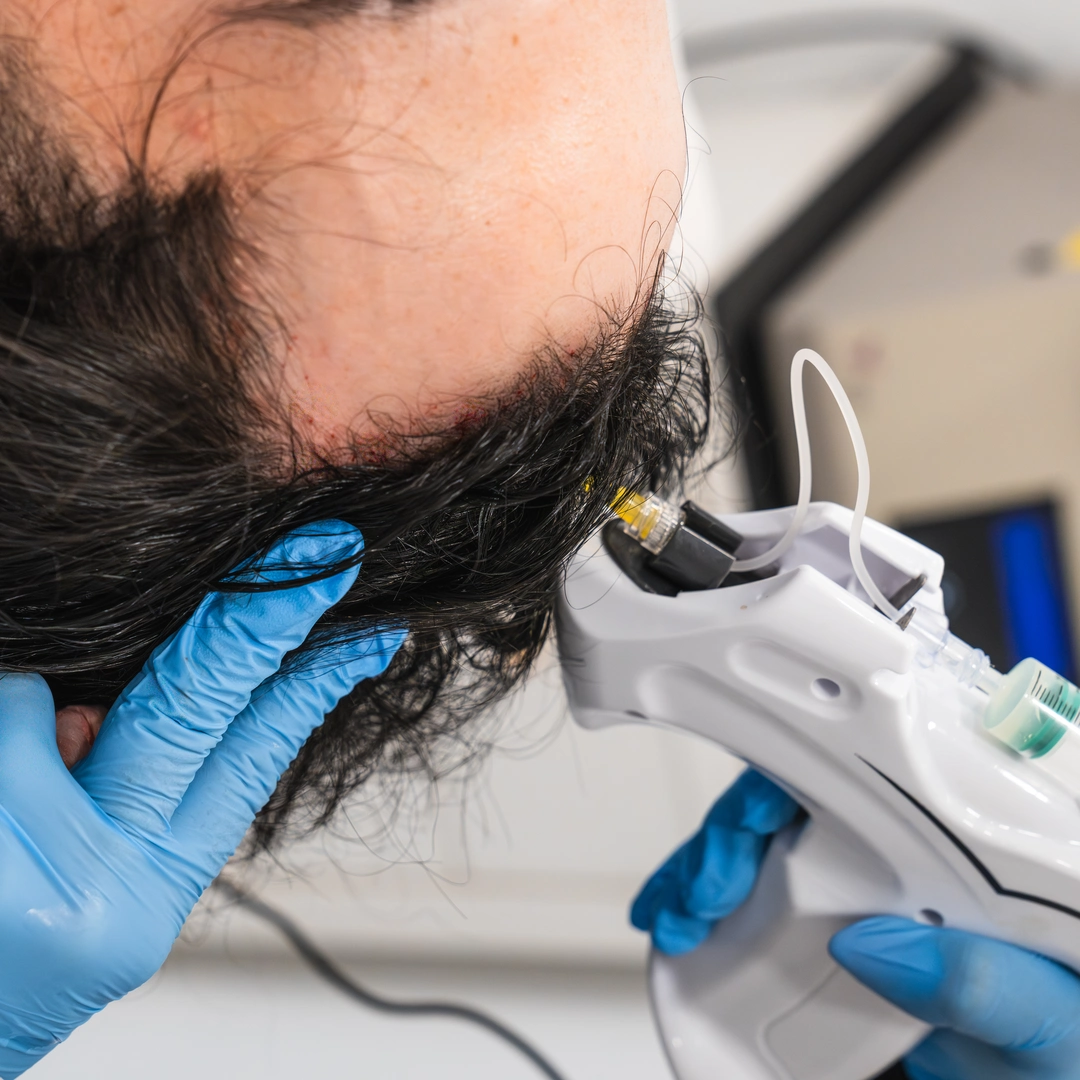
PRF is a regenerative treatment using the patient’s own blood sample. After processing, the platelet-rich fibrin is injected into targeted areas of the scalp to release growth factors gradually. PRF may help improve hair thickness, follicle stimulation, and scalp rejuvenation.
Carboxytherapy
Carboxytherapy involves the controlled use of medical carbon dioxide beneath the scalp. This can help improve local circulation, oxygen delivery, and scalp stimulation. It is often used alongside PRF, laser therapy, and topical treatments.
Steroid Injections
Steroid injections may be recommended in selected cases of patchy inflammatory hair loss, particularly alopecia areata. These injections help reduce local inflammation around the hair follicle. Local steroid injections are commonly used for small patches of alopecia areata and may be repeated where clinically appropriate.
Your Treatment Journey
1. Consultation and Scalp Assessment
Your journey begins with a detailed medical consultation. We assess your pattern of hair loss, scalp health, medical history, medication history, hormonal factors, and lifestyle triggers. In some cases, blood tests or GP referral may be advised.
2. Personalised Treatment Plan
A bespoke plan is created depending on the cause and severity of hair loss. Some patients may require topical treatment only, while others benefit from a combination of laser therapy, PRF, carboxytherapy, and medical treatment.
3. Treatment Course
Most patients require a course of treatments over several months. Hair growth is gradual, and consistency is essential. Depending on your plan, sessions may be performed every 2–6 weeks.
4. Review and Maintenance
Progress is reviewed with clinical photography and scalp assessment. Maintenance treatments may be recommended every few months to preserve results and support long-term hair health.
Results You Can Expect
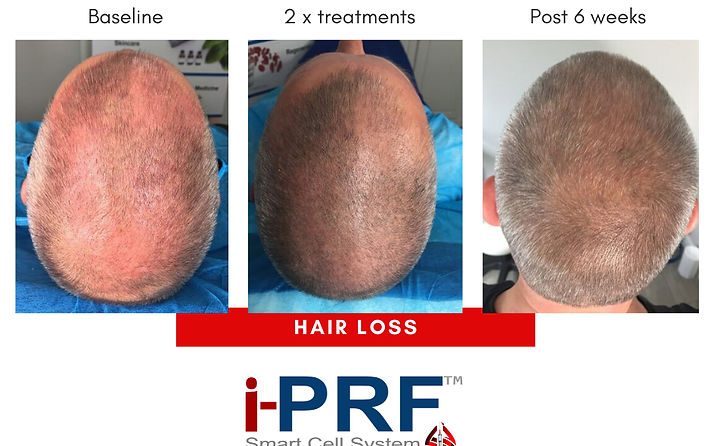
Hair restoration is gradual. Most patients begin to notice reduced shedding first, followed by improved hair strength, texture, and density over time.
Expected improvements may include:
- Reduced hair shedding
- Improved hair thickness
- Stronger hair quality
- Better scalp condition
- Increased density in thinning areas
- Improved confidence
- Slower progression of hair loss
Visible results commonly take 3–6 months, with continued improvement possible over 6–12 months, depending on the cause of hair loss and treatment compliance.
No treatment can guarantee full regrowth, and results vary between patients. Hair-loss treatments usually need ongoing maintenance, as benefits may reduce if treatment is stopped. (MyHealth Devon)
Key Benefits
- Medical-led personalised treatment
- Combination approach for enhanced results
- Suitable for early and moderate hair thinning
- Regenerative options using PRF
- Non-surgical treatment options
- Minimal downtime
- Can support both men and women, depending on diagnosis
- Helps improve scalp health as well as hair quality
- Maintenance plans available for long-term support
Aftercare Advice
- After scalp injections, PRF, carboxytherapy, or laser treatments, we usually advise:
- Avoid touching or rubbing the treated scalp for several hours.
- Avoid strenuous exercise for 24 hours.
- Avoid alcohol for 24 hours where possible.
- Avoid swimming, sauna, and steam rooms for 24–48 hours.
- Do not apply harsh hair products immediately after treatment.
- Avoid hair dye or chemical treatments for several days after injectable treatments.
- Use prescribed or recommended homecare consistently.
- Follow your personalised Minoxidil or medication instructions carefully.
- Protect the scalp from sun exposure if there is any sensitivity.
Treatment Summary
| Treatment | Purpose | Downtime | Course |
| Topical Minoxidil | Supports growth and reduces shedding | None | Ongoing |
| Finasteride | Helps reduce DHT-related hair loss | None | Ongoing if suitable |
| Erbium Glass Laser | Scalp stimulation and follicle support | Minimal | Course advised |
| 658nm Laser | Low-level laser stimulation | None | Course advised |
| PRF | Regenerative growth-factor treatment | Minimal | Usually 3–4 sessions |
| Carboxytherapy | Improves circulation and scalp stimulation | Minimal | Course advised |
| Steroid Injection | For selected patchy inflammatory hair loss | Minimal | As clinically required |
Why Choose Skin & Scar Care Clinic, Altrincham
At Skin & Scar Care Clinic, your safety and satisfaction come first. Our treatments are delivered by qualified medical professionals using FDA-approved laser systems and evidence-based protocols.
We pride ourselves on delivering visible, lasting results with a calm, clinical environment and a truly personalised approach to skincare.
Before & After
Frequently Asked Questions
Yes, many treatments such as Minoxidil, PRF, Erbium Glass Laser, 658nm laser, and carboxytherapy may be suitable for women. Finasteride requires careful medical assessment and is not suitable during pregnancy or breastfeeding.
Most treatments are well tolerated. PRF, carboxytherapy, and steroid injections may cause mild discomfort, but this is usually brief.
Most patients require a course of treatments. A typical regenerative programme may include 3–4 PRF sessions combined with laser or carboxytherapy, followed by maintenance.
Hair growth is slow. Reduced shedding may be noticed earlier, but visible improvement usually takes 3–6 months, with further improvement over 6–12 months.
Results can be long-lasting, but the ageing process continues. Weight changes, hormonal changes, sun exposure, and lifestyle factors can affect results. Maintenance treatments may be recommended.
Not always. The aim is to slow progression, strengthen existing follicles, improve density where possible, and support healthier scalp function. Advanced baldness may require surgical hair transplantation.
Yes. Combination treatment often provides better outcomes than a single treatment alone, especially when hair loss has multiple contributing factors.
Maintenance is usually required. Hair loss is often a long-term condition, and ongoing treatment may be needed to preserve results.
No. Steroid injections are mainly used for selected inflammatory or autoimmune hair-loss conditions such as small patches of alopecia areata. They are not usually the main treatment for male or female pattern hair loss.
Important Disclaimer
All hair restoration treatments are subject to medical consultation and suitability assessment. Results vary between individuals, and no specific outcome can be guaranteed. Prescription-only treatments are offered only when clinically appropriate following assessment.
Following a recent consultation with Mr Salahuddin to discuss various aesthetic treatments, including ebrium laser, c02 laser and endolift. I had my first session of ebrium laser treatment today. I can honestly say Mr Salahuddin's approach is excellent! He was very informative and went into great detail about each treatment, whilst remaining courteous, honest and professional at all times. We worked out a plan 'together' and he helped with any concerns I had. I am excited to start my journey with him and I have more than 100% faith in his ability as a medical professional to give me the results I want to achieve. I would highly recommend Mr Salahuddin, his expertise is second to none.
Joan Loudon