

6 stars if I could! I had both my Rosacea treated, which was wildly successful, and have had a tattoo removed by the Team at Skin and Scar Clinic. They were courteous and professional and the fact they were all registered doctors really reassured me. I would recommend to anyone seeking a professional, reliable and great value service. Best wishes Jack
jack martinmy husband has recently received laser treatment for his shoulder tattoo and cannot believe the different it has already made! Omer was fantastic explaining everything to my partner including aftercare and what was going to happen during the treatment. Thank you very much and looking forward to see you soon!
Maria laneI had an amazing experience at the Skin & Scar Clinic. From the moment I arrived, the team was warm, professional, and made me feel completely at ease. Mr. Omer Salahuddin, the Medical Director, personally took the time to explain every detail of my treatment plan and answered all my questions with great patience and care. The laser treatment itself was handled with precision and professionalism — I felt confident that I was in the best hands. What really stood out was the level of attention to detail throughout the process and the excellent aftercare. The team checked in regularly to make sure I was healing well and comfortable. I’m so happy with my results and truly appreciate how they combined medical expertise with genuine care. Highly recommended for anyone looking for safe, effective, and professional skin or scar treatments!
Abdul Rehman QaziAdvanced Pico Laser Treatment for Clearer, Brighter and More Even-Looking Skin
Pico laser is an advanced laser treatment used for a wide range of pigmentation and skin-brightening concerns. It can help improve the appearance of freckles, sun-related pigmentation, superficial brown marks, uneven skin tone, selected melasma cases, carbon peel facial rejuvenation and tattoo correction.
At Skin and Scar Care Clinic, we use Pico laser technology in a personalised way, selecting the most suitable wavelength and treatment mode depending on your skin type, pigmentation depth, diagnosis and treatment goal.
Pico laser treatment may be suitable for:
- Melasma management
- Freckles
- Sun spots
- Brown pigmentation
- Superficial pigmentation
- Post-inflammatory pigmentation
- Uneven skin tone
- Skin brightening
- Carbon peel facial
- Tattoo correction
- Selected tattoo removal
- Dull skin and enlarged pores
- Rejuvenation using 1064 nm honeycomb / fractional mode
- Pigmentation treatment using 755 nm Alexandrite wavelength
Pico laser is not a one-size-fits-all treatment. The safest and most effective approach depends on correct diagnosis, careful settings, skin preparation, sun protection and a realistic treatment plan.
What Is Pico Laser?
Pico laser is a pigment-targeting laser that delivers energy in extremely short pulses. These pulses are measured in picoseconds, which are much shorter than traditional nanosecond laser pulses.
Instead of relying mainly on heat, Pico laser creates a rapid photoacoustic effect. In simple terms, it sends a very fast burst of energy into pigment particles, helping break them into smaller fragments. The body then gradually clears these fragments through natural processes.
This makes Pico laser useful for:
- Pigmentation
- Tattoo ink
- Freckles
- Superficial brown marks
- Skin brightening
- Melasma support in selected cases
- Carbon peel facial treatment
- General tone and texture improvement
How Pico Laser Works
Pico laser works by targeting pigment particles in the skin.
These pigment particles may be:
- Natural melanin causing brown marks
- Sun-related pigmentation
- Freckles
- Post-inflammatory pigmentation
- Tattoo ink particles
- Superficial pigment deposits
- Uneven tone caused by pigment build-up
The laser energy breaks the pigment into smaller pieces. Over the following days and weeks, the body gradually clears the treated pigment.
Different wavelengths reach different depths and target different colours. This is why a proper consultation is important before treatment.
Pico Laser Wavelengths Used in Pigmentation and Brightening
1064 nm Pico Laser
The 1064 nm wavelength is commonly used for deeper and more conservative pigment treatment. It is often preferred in darker or pigmentation-prone skin types because it penetrates more deeply and is less strongly absorbed by surface melanin compared with shorter wavelengths.
1064 nm Pico laser may be used for:
- Skin brightening
- Melasma support in selected cases
- Post-inflammatory pigmentation
- General uneven tone
- Tattoo correction
- Dark tattoo ink
- Low-downtime rejuvenation
- Honeycomb / fractional skin brightening
1064 nm Honeycomb / Fractional Mode
The 1064 nm honeycomb or fractional mode uses a specialised lens to deliver energy in a controlled pattern across the skin.
This can help:
- Improve dull skin
- Brighten overall tone
- Stimulate collagen response
- Improve pores and texture
- Support skin rejuvenation
- Reduce the appearance of mild pigmentation
- Give the skin a fresher, clearer look
This treatment is often chosen for patients who want skin brightening and rejuvenation with minimal downtime.
755 nm Alexandrite Pico Laser
The 755 nm Alexandrite wavelength is useful for selected pigmentation and tattoo colours. It is strongly absorbed by certain pigment particles and can be effective for superficial brown pigmentation when used carefully.
755 nm Pico laser may be used for:
- Freckles
- Superficial pigmentation
- Selected sun spots
- Certain tattoo colours
- Brown pigmentation
- Epidermal pigment concerns
Because 755 nm interacts more strongly with pigment in the upper layers of the skin, treatment must be planned carefully, especially in darker skin tones or melasma-prone patients.
532 nm Pico Laser
Although not suitable for every skin type, 532 nm Pico laser can be useful for selected superficial pigmentation and certain tattoo colours. It is more strongly absorbed by surface pigment, so it must be used with caution, especially in darker or pigmentation-prone skin.
532 nm may be considered for:
- Selected freckles
- Superficial pigmentation
- Red, orange or yellow tattoo pigments
- Very shallow pigment concerns
Suitability depends on skin type, pigment depth and risk of post-inflammatory pigmentation.
Indications for Pico Laser
1. Melasma
Melasma is a chronic pigmentation condition that usually appears as brown or grey-brown patches on the face. It commonly affects the cheeks, forehead, upper lip and jawline.
Melasma is often linked to:
- Sun exposure
- Heat exposure
- Hormonal changes
- Pregnancy
- Contraceptive pills
- Genetics
- Skin inflammation
- Pigmentation-prone skin types
- Visible light exposure
- Recurrent irritation from skincare or procedures
Why Melasma Is Complex
Melasma is not simply a surface stain. It is a chronic pigment condition involving melanocytes, skin inflammation, blood vessels, hormonal factors and sensitivity to light and heat.
This means melasma can improve, but it can also relapse. It often needs long-term maintenance rather than a single treatment.
Pico Laser for Melasma
Pico laser may help selected melasma patients by gently targeting excess pigment and supporting skin tone improvement. Low-energy 1064 nm Pico laser is often preferred where laser treatment is appropriate.
However, melasma must be treated carefully. Too much heat, aggressive settings or poor aftercare can make pigmentation worse.
A melasma plan may include:
- Strict SPF 50
- Tinted sun protection
- Heat avoidance
- Pigment-controlling skincare
- Azelaic acid
- Tranexamic acid skincare or medical advice where appropriate
- Hydroquinone or prescription creams where suitable
- Gentle Pico laser treatment
- Maintenance sessions
Important Melasma Limitation
Pico laser is not a cure for melasma. It may improve the appearance of pigmentation, but recurrence is common if triggers continue. Maintenance is essential.
2. Freckles
Freckles are small brown marks that often become more visible after sun exposure. They are common on the face, nose, cheeks, shoulders and arms.
Pico laser can help fade selected freckles by targeting the superficial pigment.
Benefits for Freckles
- Helps reduce visible brown speckling
- Improves evenness of skin tone
- Can create a brighter complexion
- Useful for sun-exposed areas
- Often responds faster than deeper pigmentation
Freckles may return with sun exposure, so daily SPF and maintenance are important.
3. Superficial Pigmentation
Superficial pigmentation sits closer to the surface of the skin. It may appear as flat brown marks, patchy tone or post-inflammatory pigmentation.
Pico laser may help with:
- Superficial brown spots
- Uneven pigmentation
- Post-acne marks
- Sun-related pigmentation
- Patchy tone
- Mild epidermal pigment
Superficial pigmentation usually responds better than deeper dermal pigmentation, but treatment must still be tailored to the individual.
4. Sun Spots, Age Spots and Brown Pigmentation
Sun spots, also called age spots or solar lentigines, are caused by long-term sun exposure. They commonly appear on the face, hands, chest, shoulders and forearms.
Pico laser can help break down the pigment in suitable sun spots. Some marks darken slightly after treatment before flaking or fading.
Benefits
- Targets visible brown marks
- Improves sun-damaged appearance
- Helps create a clearer complexion
- Can be combined with SPF and brightening skincare
- Often suitable for focused spot treatment
Any irregular, changing or suspicious brown lesion must be medically assessed before laser treatment.
5. Pigmentation After Acne or Inflammation
Post-inflammatory pigmentation can occur after acne, eczema, irritation, picking, burns or cosmetic procedures. It is more common in darker skin tones.
Pico laser may help selected cases, but the skin must be calm first. Treating inflamed or irritated skin too early can worsen pigmentation.
A safe plan may include:
- Barrier repair
- SPF 50
- Azelaic acid
- Gentle pigment-control skincare
- DPL or acne treatment if inflammation is active
- Pico laser once the skin is stable
6. Carbon Peel Facial
A Pico carbon peel facial is a skin-refreshing treatment where a thin layer of carbon lotion is applied to the skin and then targeted with laser energy.
The carbon helps absorb oil, impurities and laser energy on the skin surface. The laser then removes the carbon particles, creating a gentle exfoliating and brightening effect.
Carbon Peel May Help With
- Dull skin
- Oily skin
- Congestion
- Enlarged pores
- Uneven tone
- Mild pigmentation
- Rough texture
- Tired-looking skin
- Mild acne-prone skin
Benefits of Carbon Peel Facial
- Brighter-looking skin
- Fresher complexion
- Reduced surface oil
- Smoother skin feel
- Minimal downtime
- Good “event-prep” facial for suitable skin
- Can be repeated as maintenance
Carbon peel is not a substitute for medical acne treatment, melasma treatment or deep pigmentation correction, but it can be a useful part of a skin-brightening plan.
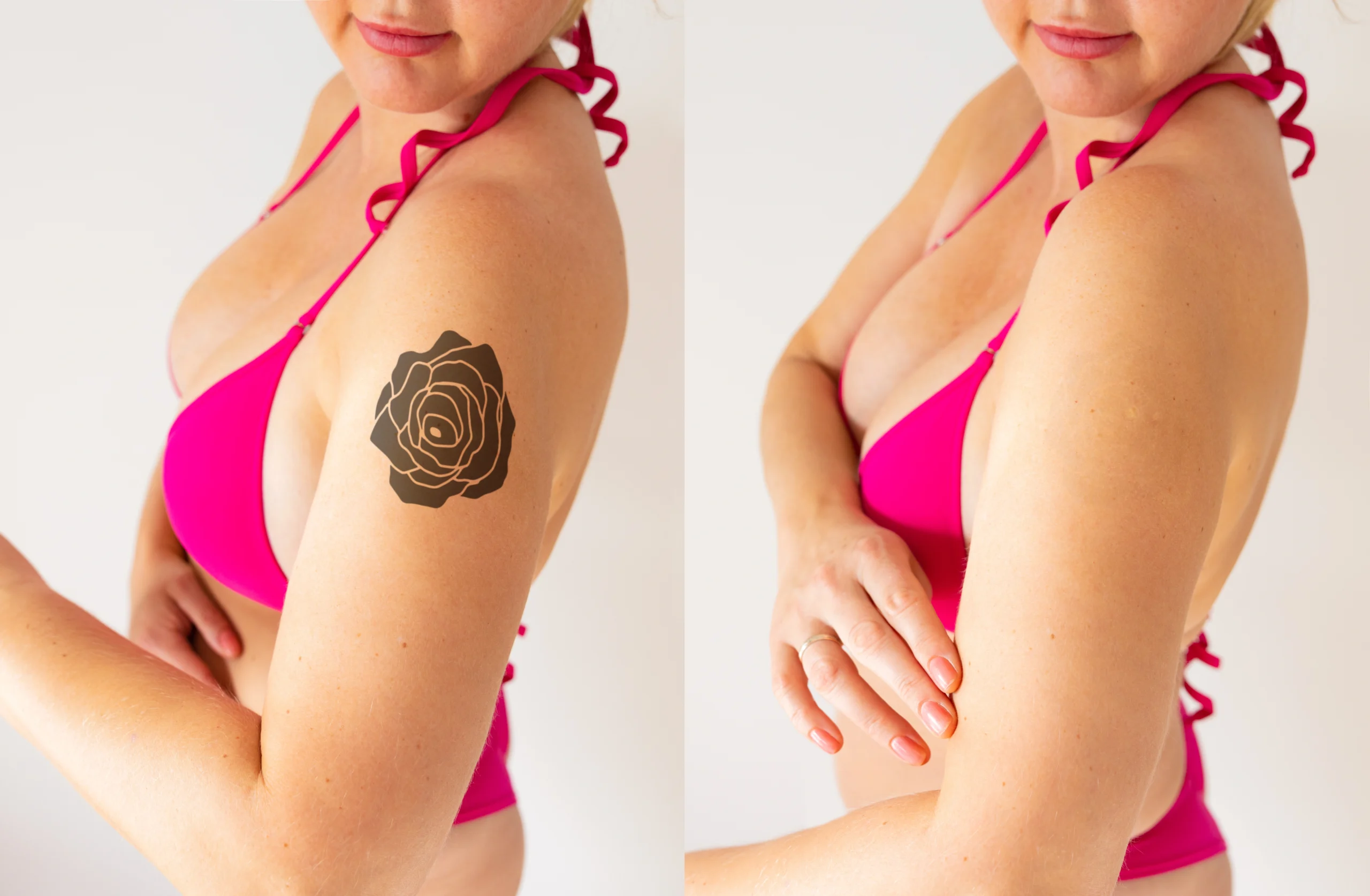
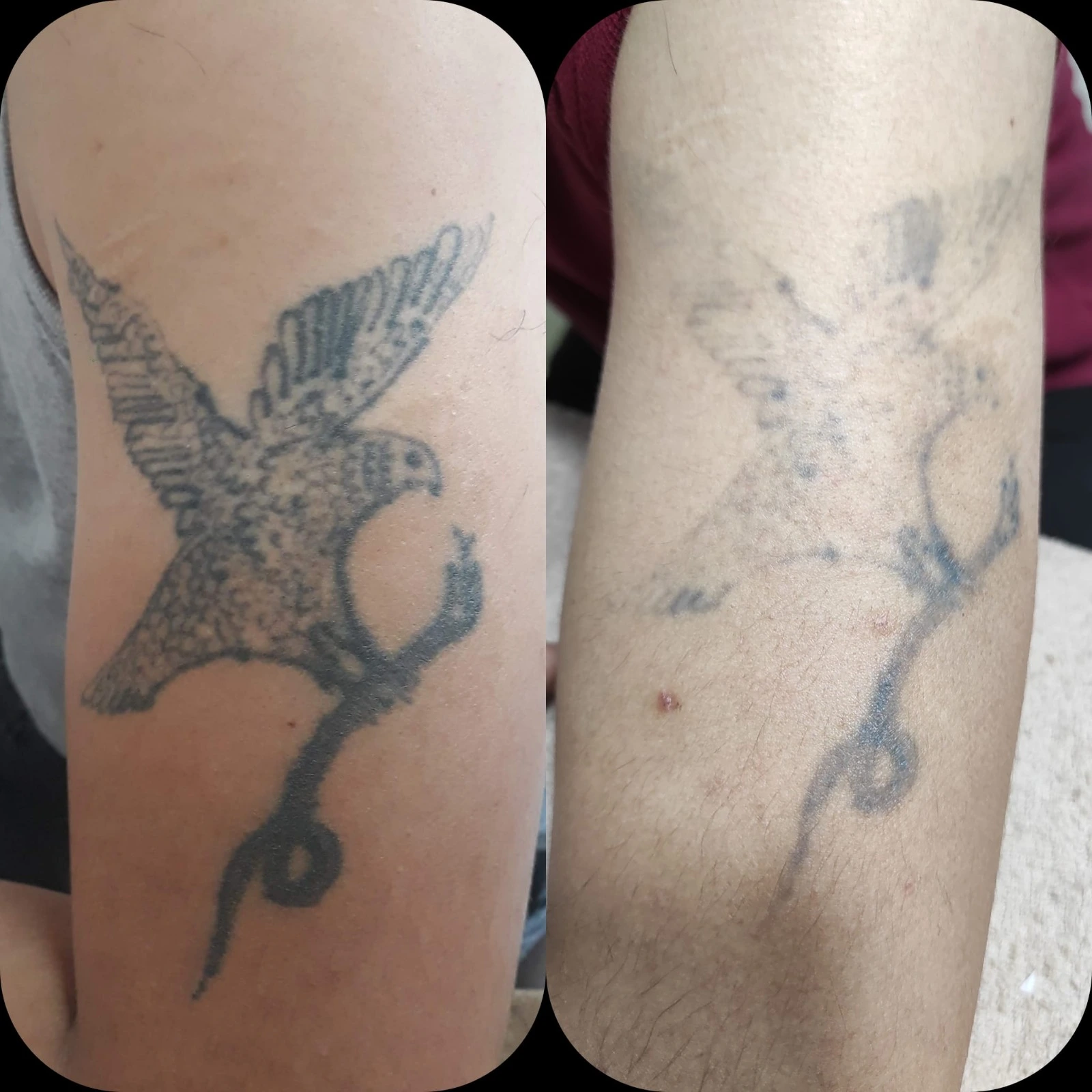
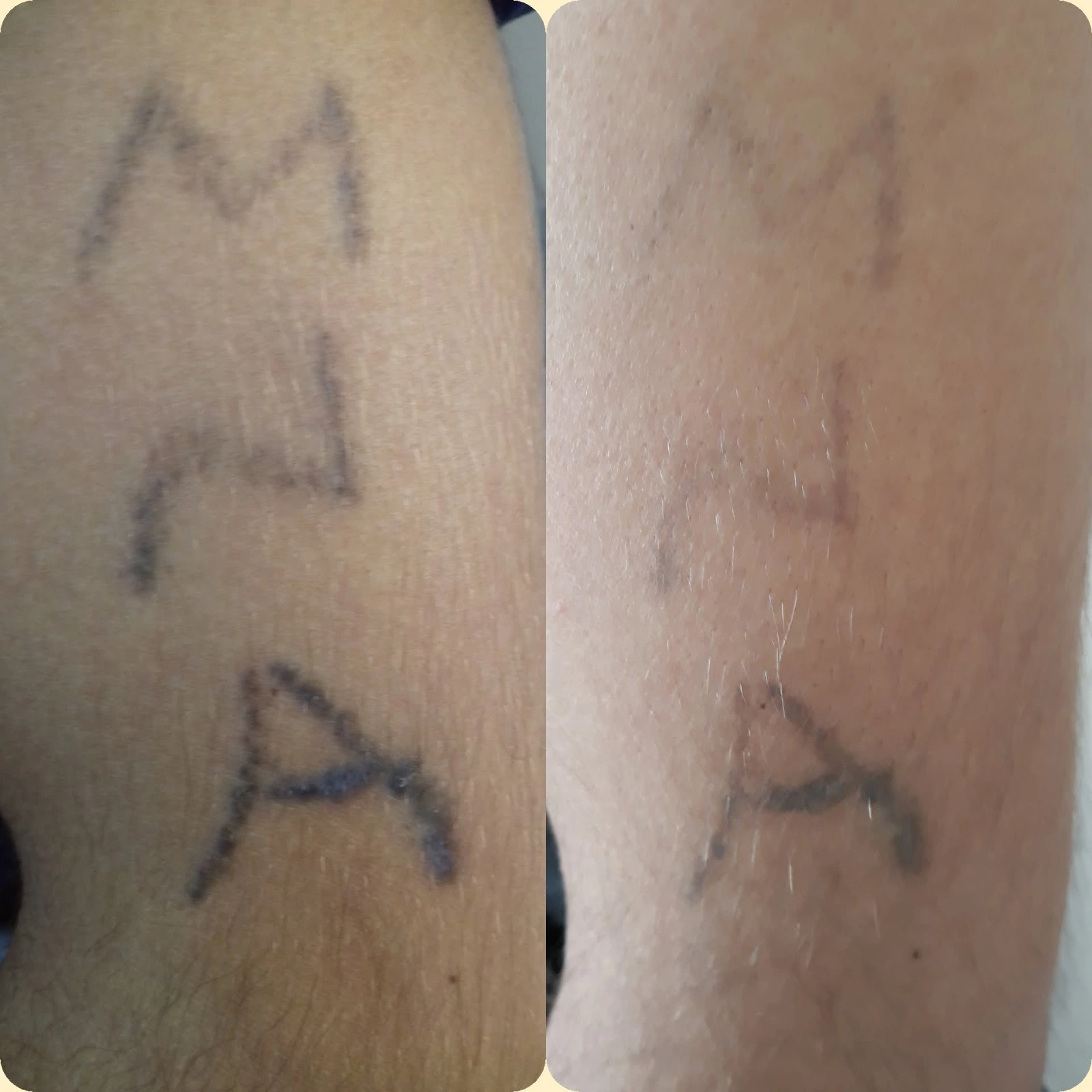
7. Tattoo Correction and Tattoo Removal
Pico laser is widely used for tattoo correction and tattoo removal because tattoo ink particles respond well to ultra-short laser pulses.
The laser breaks ink particles into smaller fragments, which the body gradually clears over time.
Pico laser may help with:
- Faded tattoo correction
- Old tattoo lightening
- Partial tattoo removal
- Tattoo reshaping before cover-up
- Cosmetic tattoo correction
- Dark ink tattoos
- Selected coloured tattoo pigments
Tattoo Correction vs Tattoo Removal
Tattoo correction does not always mean full removal. Many patients only need lightening or softening of the tattoo before a cover-up or cosmetic correction.
Treatment goals may include:
- Fading old tattoo ink
- Softening harsh edges
- Reducing unwanted pigment
- Preparing for new tattoo work
- Correcting cosmetic tattoo colour
- Improving asymmetry from previous tattooing
Important Tattoo Limitations
Tattoo response varies. Some tattoos clear well, while others only fade partially.
Factors affecting results include:
- Ink colour
- Ink depth
- Professional vs amateur tattoo
- Age of tattoo
- Skin type
- Location on the body
- Immune clearance
- Previous laser treatment
- Scarring within the tattoo
- Type of ink used
White, flesh-coloured, yellow, green and cosmetic tattoo pigments can be more difficult and may sometimes darken after laser due to pigment oxidation. A test patch is strongly recommended for cosmetic tattoos.
8. Skin Brightening with 1064 nm Honeycomb and 755 Alexandrite Combination
For selected patients, we may combine 1064 nm honeycomb Pico treatment with 755 nm Alexandrite Pico laser to address both overall skin brightness and more defined pigmentation.
1064 nm Honeycomb
This is useful for:
- General skin brightening
- Dullness
- Uneven tone
- Mild pigmentation
- Pore appearance
- Collagen stimulation
- Low-downtime rejuvenation
755 nm Alexandrite
This is useful for:
- More defined brown spots
- Freckles
- Superficial pigmentation
- Selected sun-related marks
- Certain tattoo colours
Benefits of Combination Treatment
- Targets both general dullness and focal pigmentation
- Helps brighten overall complexion
- Improves uneven tone
- Supports collagen stimulation
- Can be customised to skin type
- Useful for pigmentation and rejuvenation together
- Minimal downtime compared with aggressive resurfacing
Combination treatment is not suitable for everyone. Patients with active melasma, active tanning or high pigmentation risk may need a more cautious plan.
Benefits of Pico Laser
Pico laser may offer several benefits when used appropriately.
Potential benefits include:
- Targets pigment precisely
- Helps break down tattoo ink
- Can improve freckles and sun spots
- Supports skin brightening
- Can improve uneven tone
- Lower heat build-up compared with some older laser technologies
- Minimal downtime for many treatments
- Can be suitable for a range of skin tones when settings are chosen carefully
- Can be combined with skincare and other laser treatments
- Useful for both pigmentation and rejuvenation goals
- May help collagen stimulation using fractional / honeycomb modes
Contraindications and When Pico Laser May Not Be Suitable
Pico laser is not suitable for everyone. Treatment may be delayed or avoided if you have:
- Active infection in the treatment area
- Active cold sore or herpes flare
- Open wounds or broken skin
- Active inflammatory acne in the area
- Active eczema, dermatitis or severe irritation
- Recent sunburn
- Recent tanning or fake tan
- Pregnancy or breastfeeding, depending on clinic policy and treatment area
- Recent isotretinoin use, depending on dose, timing and treatment type
- Photosensitivity disorders
- Use of photosensitising medication
- History of poor wound healing
- Strong tendency to keloid scarring
- Uncontrolled diabetes or immune suppression
- Suspicious or changing pigmented lesions
- Recent aggressive peel or laser treatment
- Unrealistic expectations
- Inability to follow sun protection and aftercare
For tattoo treatment, additional caution is needed if there is:
- Previous allergic reaction to tattoo ink
- Raised or scarred tattoo
- Cosmetic tattoo pigment
- White, flesh-coloured or yellow pigment
- History of blistering or pigment change after laser
- Tattoo over a mole or uncertain lesion
A consultation is essential before treatment.
Limitations of Pico Laser
Pico laser is powerful, but it has limitations.
Melasma Can Relapse
Melasma is chronic and often returns if triggers such as sun, heat, hormones or inflammation continue. Pico laser may improve melasma in selected cases, but it cannot guarantee permanent clearance.
Not All Pigmentation Responds the Same
Superficial pigmentation usually responds better than deeper dermal pigmentation. Mixed pigmentation may need a longer plan.
Tattoo Removal Is Not Guaranteed
Some tattoos fade significantly, but complete removal cannot be guaranteed. Certain colours are more resistant.
Cosmetic Tattoos Can Darken
Some cosmetic tattoo pigments contain iron oxide or titanium dioxide and may turn darker after laser. A test patch is important.
Darker Skin Types Need Extra Care
Darker skin tones can be treated, but settings must be conservative to reduce the risk of hyperpigmentation or hypopigmentation.
Results Take Time
Pigment clearance happens gradually. Multiple sessions are usually required.
Sun Protection Is Essential
Without daily SPF and careful aftercare, pigmentation can return or worsen.
Treatment Timeline
Step 1: Consultation and Skin Assessment
Your practitioner will assess:
- Skin type
- Pigmentation type
- Pigment depth
- Melasma risk
- Sun exposure history
- Medical history
- Medication
- Previous treatments
- Recent tanning
- Sensitivity and healing response
- Whether a test patch is needed
If there is any concern about a mole or changing pigmented lesion, medical assessment may be recommended before laser treatment.
Step 2: Skin Preparation
For pigmentation and melasma, skin preparation may be advised for 2–6 weeks before treatment.
This may include:
- SPF 50 daily
- Tinted sunscreen if melasma-prone
- Gentle cleanser
- Barrier repair moisturiser
- Azelaic acid
- Tyrosinase inhibitors
- Retinoid if suitable
- Avoiding tanning
- Avoiding harsh exfoliation
- Stopping irritating skincare
Skin preparation helps reduce the risk of rebound pigmentation.
Step 3: Test Patch
A test patch may be recommended for:
- Melasma
- Darker skin tones
- Cosmetic tattoos
- Tattoo colours at risk of darkening
- Previous pigmentation problems
- Sensitive skin
- Large treatment areas
This allows us to check how your skin responds before proceeding with full treatment.
Step 4: Treatment Session
During treatment, you may feel warmth, snapping or mild stinging. Cooling may be used to improve comfort.
Treatment time depends on the area:
- Small pigmentation spot: usually a short appointment
- Full face brightening: usually 20–45 minutes
- Carbon peel facial: usually 30–45 minutes
- Tattoo correction: depends on tattoo size and colour
- Melasma treatment: usually gentle, controlled sessions
Step 5: Immediate Aftercare
After treatment, the skin may be red, warm or slightly swollen. Pigmented spots may darken before fading or flaking.
You may be advised to:
- Use gentle skincare
- Avoid active products for a few days
- Avoid heat, sauna and steam
- Avoid picking or scratching
- Avoid sun exposure
- Use SPF 50 daily
- Avoid tanning and fake tan
- Keep the skin moisturised
- Follow personalised aftercare instructions
Typical Number of Sessions
Treatment course varies depending on the indication.
Freckles and Superficial Pigmentation
Usually:
1–3 sessions
Sessions spaced:
4–6 weeks apart
Sun Spots and Brown Spots
Usually:
1–4 sessions
Sessions spaced:
4–6 weeks apart
Melasma
Usually:
4–6 sessions or more
Sessions spaced:
2–4 weeks apart, depending on settings and skin response
Maintenance is usually required.
Skin Brightening / 1064 nm Honeycomb
Usually:
4–6 sessions
Sessions spaced:
2–4 weeks apart
Maintenance every 3–6 months may be advised.
Carbon Peel Facial
Usually:
4–6 sessions
Sessions spaced:
2–4 weeks apart
Maintenance every 4–8 weeks or before events may be suitable.
Tattoo Correction or Tattoo Removal
Usually:
6–12 sessions or more
Sessions spaced:
6–8 weeks apart
Some tattoos require more sessions, especially professional, coloured, deep or previously treated tattoos.
Maintenance
Maintenance depends on the condition being treated.
For pigmentation and brightening, maintenance may include:
- SPF 50 daily
- Tinted sunscreen for melasma-prone skin
- Avoiding tanning
- Pigment-control skincare
- Azelaic acid or other brightening agents
- Antioxidant skincare
- Pico maintenance sessions
- Review during summer or after holidays
For melasma, maintenance is not optional. It is the most important part of long-term control.
For tattoo correction, maintenance is not usually needed once the desired fading is achieved, but additional sessions may be needed if further lightening is desired.
What Results Can You Expect?
Results vary depending on the diagnosis and treatment goal.
Pico laser may help improve:
- Freckles
- Sun spots
- Superficial pigmentation
- Uneven tone
- Dullness
- Skin brightness
- Mild texture concerns
- Tattoo fading
- Tattoo correction
- Carbon peel glow
- Melasma appearance in selected patients
Some patients notice early brightness after the first session. Pigmentation often fades gradually over several weeks. Tattoo ink clears slowly between sessions as the body processes the fragmented ink.
No treatment can guarantee complete clearance.
Before & After

Frequently Asked Questions
Pico laser is an advanced pigment and tattoo laser that delivers energy in ultra-short pulses. It breaks pigment or ink into tiny particles so the body can gradually clear them.
Pico laser can treat freckles, sun spots, superficial pigmentation, selected melasma cases, tattoo correction, tattoo removal, carbon peel facials and skin brightening.
Pico laser may help selected melasma patients, especially when used gently with 1064 nm settings. However, melasma is complex and can relapse. It must be combined with sun protection and skincare.
No. Melasma cannot be guaranteed to be cured. Pico laser may improve pigmentation, but maintenance is essential and flare-ups can return.
Low-fluence 1064 nm treatment is often preferred for selected melasma patients because it can be used more conservatively. Treatment must be personalised.
1064 nm honeycomb Pico laser uses a fractional lens to deliver controlled energy across the skin. It can support skin brightening, collagen stimulation, pore refinement and rejuvenation.
755 nm Alexandrite Pico laser is useful for selected brown pigmentation, freckles and certain tattoo colours. It targets pigment more strongly and must be used carefully in darker or pigmentation-prone skin.
Pico laser can improve selected freckles and superficial brown marks. Freckles may return with sun exposure, so SPF is essential.
Yes, many benign sun spots and age spots can improve with Pico laser. Any changing or irregular brown lesion must be assessed before laser.
Yes, Pico laser may help selected post-inflammatory pigmentation, but active acne and inflammation should be controlled first.
A carbon peel facial uses carbon lotion and laser energy to refresh the skin surface, reduce oiliness, brighten dull skin and improve smoothness.
It may help oily and congested skin feel fresher and smoother, but it is not a substitute for medical acne treatment.
Yes. Pico laser, especially 1064 nm honeycomb mode, can support skin brightening and a clearer-looking complexion.
Some tattoos clear very well, but complete removal cannot be guaranteed. Tattoo colour, depth, age and ink type affect results.
Many tattoos require 6–12 sessions or more. Sessions are usually spaced 6–8 weeks apart.
Most patients describe the sensation as snapping, warmth or mild stinging. Tattoo treatment is usually more uncomfortable than pigmentation or brightening treatments.
Downtime varies. Skin brightening and carbon peel usually have minimal downtime. Pigmentation spots may darken and flake. Tattoo treatment may cause redness, swelling, crusting or blistering.
For gentle brightening treatments, makeup may be possible the next day if the skin is intact. After stronger pigment or tattoo treatment, you may need to avoid makeup until the area heals.
Yes, but treatment must be carefully planned. Darker skin tones have a higher risk of pigmentation changes, so conservative settings and test patches may be needed.
Yes, if treatment is too aggressive, if the skin is inflamed, or if sun protection is poor. Melasma in particular can worsen with heat or irritation.
Avoid tanning, sunburn, fake tan, harsh exfoliation, strong retinoids, active irritation and recent aggressive procedures before treatment.
Avoid sun exposure, heat, sauna, steam, picking, harsh skincare, exfoliation and active ingredients until advised.
Some brightness may be visible within days. Pigmentation usually fades over 2–6 weeks. Tattoo fading continues gradually between sessions.
Some pigment can clear long-term, but new pigmentation can develop with sun exposure, hormones, ageing or inflammation. Melasma often needs ongoing maintenance.
Yes. SPF 50 is essential after Pico laser, especially for pigmentation and melasma. Without sun protection, pigmentation can return or worsen.
Safety and Medical Disclaimer
Pico laser treatment is a medical-aesthetic procedure and is subject to consultation, assessment, suitability and informed consent.
Pico laser can improve pigmentation, freckles, sun spots, skin brightness, carbon peel results and tattoo fading in suitable patients, but results vary and no treatment outcome can be guaranteed.
Melasma is a chronic and relapsing pigmentation condition. Pico laser may improve melasma in selected patients, but it cannot guarantee permanent clearance. Flare-ups can recur due to sun exposure, heat, hormones, inflammation or skincare irritation.
Laser treatment may cause temporary redness, swelling, warmth, discomfort, bruising, darkening of pigment, crusting, blistering, peeling, infection, cold sore flare-up, burns, scarring, hyperpigmentation, hypopigmentation, incomplete clearance or recurrence.
Tattoo treatment may cause blistering, crusting, bleeding points, swelling, colour change, incomplete fading, scarring, ghosting, pigment darkening or allergic reaction. Cosmetic tattoos and white, flesh-coloured or yellow pigments require special caution and may need a test patch.
Patients with darker skin tones, melasma, active tanning, recent sun exposure, pregnancy, breastfeeding, recent isotretinoin use, photosensitivity, active infection, poor wound healing, keloid tendency or certain medical conditions may require special precautions or may not be suitable for treatment.
Suspicious, changing or undiagnosed pigmented lesions should not be treated cosmetically with laser. Medical assessment, dermoscopy or referral may be required before treatment.
Strict aftercare and sun protection are essential. Failure to follow aftercare may increase the risk of pigmentation changes, burns, delayed healing or unsatisfactory results.
Following a recent consultation with Mr Salahuddin to discuss various aesthetic treatments, including ebrium laser, c02 laser and endolift. I had my first session of ebrium laser treatment today. I can honestly say Mr Salahuddin's approach is excellent! He was very informative and went into great detail about each treatment, whilst remaining courteous, honest and professional at all times. We worked out a plan 'together' and he helped with any concerns I had. I am excited to start my journey with him and I have more than 100% faith in his ability as a medical professional to give me the results I want to achieve. I would highly recommend Mr Salahuddin, his expertise is second to none.
Joan Loudon