

Finally winning the battle against hair fall! PRF + Laser is a game-changer." I cannot recommend Skin and Scar Care Clinic enough! I visited them for a combination of PRF (Platelet-Rich Fibrin) and Laser therapy to tackle my progressive hair thinning, and it was honestly one of the best investments I have ever made for my confidence. From the moment I walked in, the atmosphere was calming and supremely professional. The consultation was incredibly thorough; they used a scalp camera to show me exactly what was happening and explained the science behind how PRF (using my own growth factors) combined with low-level laser therapy works synergistically to wake up dormant follicles. They set very realistic expectations, which I really appreciated. The dual-treatment sessions are surprisingly comfortable and quick. Dr Omar's and team's technique is so precise and gentle—the PRF injections were far less painful than I anticipated, and the laser session afterward felt warm and relaxing. I’m now a few months in, and the results are undeniable. My shedding has drastically reduced, I can see tiny new baby hairs sprouting along my hairline, and my existing hair looks noticeably thicker and shinier. If you are struggling with hair fall, look no further than Skin and Scar Care Clinic. They are true regenerative experts!
Muhammad UmerNatural Regenerative Treatment Using Your Own Blood
Platelet-Rich Fibrin, commonly known as PRF, is an advanced regenerative treatment that uses components from your own blood to support skin repair, collagen stimulation, hair follicle activity and tissue quality.
At Skin and Scar Care Clinic, we use PRF as part of a personalised treatment plan for:
- Hair fall and thinning hair
- Early male and female pattern hair loss
- Vampire Facial / skin rejuvenation
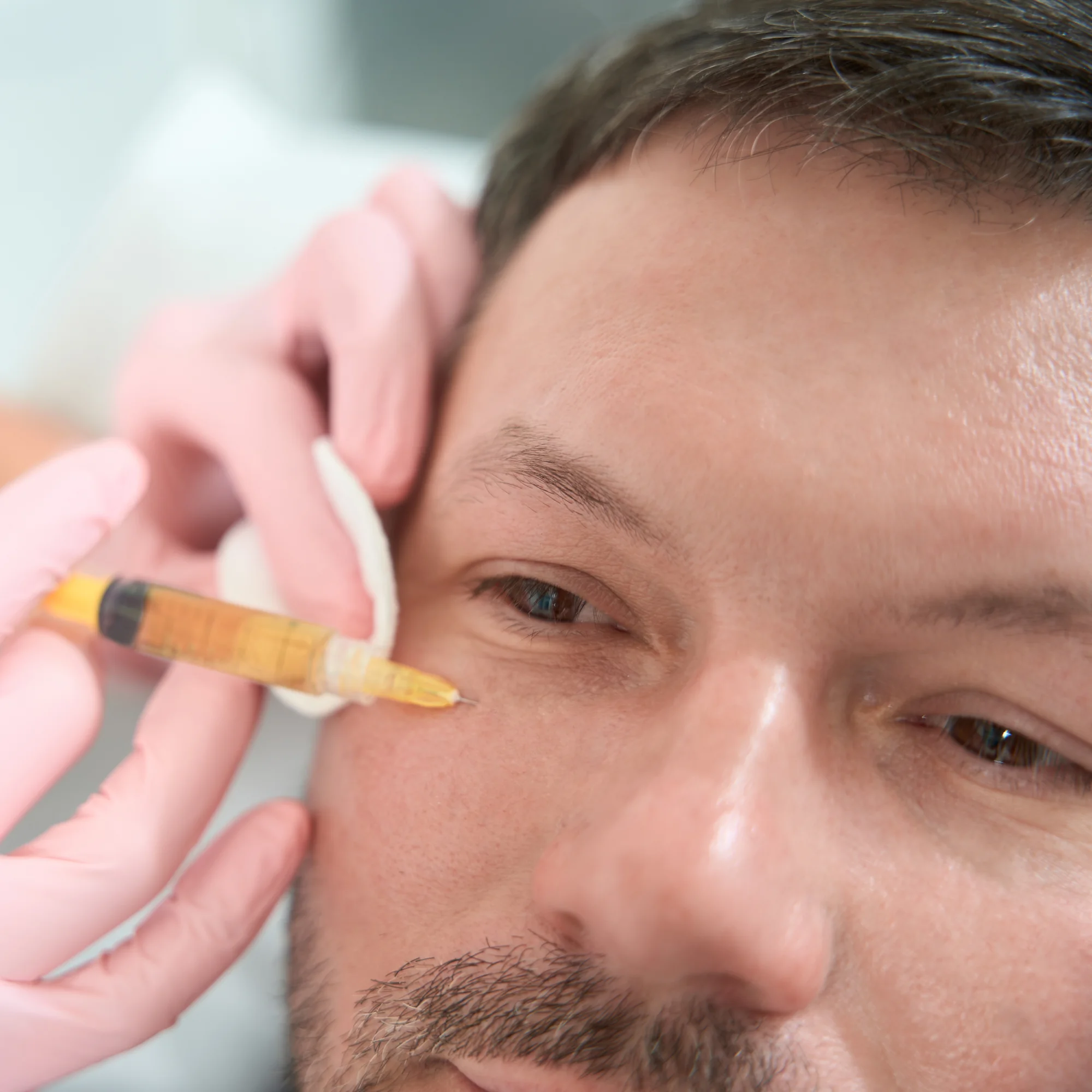
- Dark circles and under-eye skin quality
- Tear trough improvement in selected cases
- Acne scars and scar remodelling
- Fine lines and crepey skin
- Skin texture and collagen support
PRF is often described as the new generation of platelet treatment because it contains a natural fibrin matrix, does not usually require anticoagulant additives, and releases growth factors more gradually than traditional PRP.
The aim is not to artificially change your face or create an overfilled look. PRF works by supporting your body’s own repair and regeneration process.
What Is PRF (a newer version of PRP)?
PRF stands for Platelet-Rich Fibrin.
It is prepared from your own blood. A small blood sample is taken and placed into a centrifuge. The centrifuge separates the blood into different layers. The PRF layer contains platelets, fibrin and growth-factor-rich components that can be used for regenerative treatment.
PRF is completely autologous, meaning it comes from your own body. It does not involve synthetic filler, animal products or donor material.
PRF can be injected into targeted areas or used with skin treatments such as microneedling or laser-assisted protocols, depending on the indication.
How Does PRF Work?
PRF works by using the body’s own healing biology.
Platelets contain growth factors that help with tissue repair, collagen activity, blood supply and wound healing. Fibrin acts like a natural scaffold, helping to hold these regenerative signals in the treatment area for longer.
This may help stimulate:
- Collagen production
- Skin repair
- Tissue remodelling
- Hair follicle support
- Improved skin thickness
- Improved skin texture
- Healing response in scars
- Under-eye skin quality
- Gradual soft tissue improvement
PRF does not work like dermal filler. It does not create instant artificial volume. Instead, it encourages a gradual regenerative response.
Why Is PRF Called the New Generation of PRP?
PRF is often described as the next generation of platelet therapy because it is prepared differently from traditional PRP.
Traditional PRP is platelet-rich plasma. It is usually more liquid and often prepared with anticoagulants to stop the blood from clotting too quickly.
PRF is processed more gently and usually without anticoagulants. This allows a natural fibrin network to form. The fibrin matrix may help release growth factors more slowly and support longer tissue contact.
This is why PRF is often preferred for delicate areas such as:
- Under eyes
- Tear trough region
- Fine lines
- Crepey skin
- Facial rejuvenation
- Scar remodelling
- Hair restoration support
PRP vs PRF: What Is the Difference?
| Feature | PRP | PRF |
| Full name | Platelet-Rich Plasma | Platelet-Rich Fibrin |
| Generation | Earlier platelet treatment | Newer-generation platelet concentrate |
| Preparation | Often spun faster | Usually spun more gently |
| Anticoagulant | Often uses anticoagulant | Usually no anticoagulant |
| Texture | More liquid | Thicker, fibrin-rich consistency |
| Growth factor release | Faster release | Slower, more gradual release |
| Fibrin matrix | Minimal | Present |
| Tissue support | Mainly growth-factor stimulation | Growth-factor stimulation plus fibrin scaffold |
| Common uses | Skin, hair, joints, scars | Under eyes, skin quality, hair, scars, fine lines |
| Volume effect | Minimal | Mild tissue support in selected areas |
| Result style | Regenerative | Regenerative and subtly supportive |
| Evidence base | Longer history and more studies | Growing evidence and increasing clinical use |
Why PRF May Be More Advanced Than PRP
PRF may offer several practical advantages over PRP:
- It is a newer-generation platelet concentrate
- It contains a natural fibrin matrix
- It may release growth factors more gradually
- It is often prepared without anticoagulant additives
- It may remain active in the tissues for longer
- It may be particularly useful for delicate areas
- It can be suitable for under-eye skin quality
- It may support collagen, repair and tissue remodelling
- It can be used as part of natural regenerative aesthetics
However, PRF is not automatically “better” for every patient or every concern. PRP still has a strong evidence base in some areas, especially hair restoration. The best option depends on the treatment goal, skin quality, hair condition, anatomy and clinical assessment.
At Skin and Scar Care Clinic, we choose the treatment based on suitability rather than trends.
Main Indications for PRF
1. PRF for Hair Fall and Hair Thinning
PRF can be used as a regenerative hair treatment for selected patients with hair fall, thinning hair or early pattern hair loss.
It is commonly considered for:
- Male pattern hair loss
- Female pattern hair thinning
- Increased shedding
- Early hair miniaturisation
- Weak hair quality
- Post-stress hair shedding
- Post-pregnancy shedding after medical suitability
- Hair thinning with reduced density
- Support after hair transplant in selected cases
PRF works best when there are still active hair follicles present. It is less likely to help areas that are completely bald, shiny or scarred where follicles are no longer active.
How PRF Helps Hair
PRF may support hair growth by:
- Delivering platelet growth factors around the follicle
- Supporting blood supply to the scalp
- Improving the follicle environment
- Reducing inflammatory stress around follicles
- Supporting thicker-looking hair shafts
- Improving hair density in selected cases
- Helping prolong the active growth phase of hair
PRF is not a replacement for medical hair loss treatments such as minoxidil, finasteride or hormonal management where these are indicated. It is often best used as part of a combined hair restoration plan.
Who Is Suitable for PRF Hair Treatment?
You may be suitable if you have:
- Early to moderate thinning
- Increased shedding
- Weak hair quality
- Miniaturised but still active follicles
- Hair loss that has not progressed to complete baldness
- Realistic expectations
- No untreated medical cause of hair loss
A proper assessment is important because hair fall can be caused by low iron, thyroid disease, vitamin deficiency, stress, medication, hormonal imbalance, autoimmune conditions or scarring alopecia.
2. PRF Vampire Facial
A PRF Vampire Facial is a regenerative skin treatment where PRF is used to support skin repair, glow, collagen and texture.
It may be combined with:
- Microneedling
- Skin needling
- Laser treatment
- Skin booster-style protocols
- Scar remodelling treatments
The aim is to create controlled skin stimulation and then use PRF to support healing and collagen response.
Benefits of PRF Vampire Facial
PRF Vampire Facial may help improve:
- Skin glow
- Skin texture
- Fine lines
- Dull skin
- Enlarged pores
- Mild crepey skin
- Early ageing changes
- Post-acne texture
- Skin firmness
- Overall skin quality
Because PRF comes from your own blood, it is often chosen by patients who prefer a more natural regenerative treatment rather than synthetic injectable products.
What to Expect
After treatment, the skin may look red and warm, similar to a mild sunburn. This usually settles over the next few days. The skin may then gradually appear fresher, smoother and brighter as collagen activity improves.
3. PRF for Dark Circles
Dark circles can have many causes. PRF may help in selected cases, but it is important to understand the type of dark circle before choosing treatment.
Dark circles may be caused by:
- Thin under-eye skin
- Visible blood vessels
- Pigmentation
- Tear trough hollowing
- Shadowing from facial anatomy
- Poor sleep or lifestyle factors
- Genetics
- Allergies or rubbing
- Age-related collagen loss
PRF is most helpful when dark circles are linked to thin skin, poor skin quality, crepey texture or mild hollowing. It is less effective when pigmentation is deep, genetic, or caused mainly by bone structure and shadowing.
How PRF May Improve Dark Circles
PRF may help by:
- Supporting collagen under the eyes
- Improving skin thickness
- Improving under-eye texture
- Reducing crepey skin appearance
- Softening mild hollowing
- Improving skin quality and hydration support
- Creating a fresher under-eye appearance
Results are gradual and usually require more than one session.
5. PRF for Scar Remodelling
PRF can be used as part of a scar treatment plan to support healing, collagen remodelling and tissue repair.
It may be helpful for:
- Acne scars
- Depressed scars
- Atrophic scars
- Surgical scars
- Traumatic scars
- Early scars
- Scars after subcision
- Scars treated with laser
- Scars treated with microneedling
- Poor-quality scar tissue
PRF is rarely a standalone scar solution. It is often combined with scar treatments such as:
- Subcision
- CO₂ laser
- Erbium Glass laser
- Microneedling
- TCA CROSS
- Scar release
- Laser-assisted drug delivery
- Skin resurfacing
How PRF Helps Scar Remodelling
PRF may help by:
- Supporting tissue repair
- Improving collagen quality
- Supporting wound healing after scar release
- Improving skin texture
- Helping remodel depressed scar tissue
- Supporting recovery after laser
- Enhancing regenerative response in treated scars
For tethered or deep acne scars, PRF may be used after subcision to support the released area and improve healing.
4. PRF for Tear Trough Correction
The tear trough is the hollow groove between the lower eyelid and the cheek. It can create a tired, shadowed or sunken appearance.
Traditional tear trough filler can help some patients, but it is not suitable for everyone and may carry risks such as puffiness, Tyndall effect, swelling, lumpiness or overcorrection.
PRF may be suitable for patients who want a more natural, regenerative approach.
PRF May Help With:
- Mild tear trough hollowing
- Thin under-eye skin
- Crepey under-eye texture
- Early under-eye ageing
- Dark circles linked to skin thinning
- Patients unsuitable for filler
- Patients wanting subtle, natural improvement
Important Limitation
PRF does not create the same lifting or filling effect as dermal filler. It is best for skin quality, mild hollowing and gradual improvement. Significant under-eye hollowing, eye bags, malar bags or loose eyelid skin may need a different treatment plan.
Other Areas PRF May Help
PRF may also be considered for:
- Fine lines around the eyes
- Fine lines around the mouth
- Neck crepiness
- Décolletage skin quality
- Hand rejuvenation
- Skin thinning
- Early facial ageing
- Poor skin texture
- Post-laser healing support
Suitability depends on assessment.
Benefits of PRF
 PRF may offer several benefits:
- Uses your own blood
- Natural regenerative approach
- No synthetic filler
- Supports collagen stimulation
- Can improve skin quality
- Can support hair follicle activity
- May improve under-eye texture
- Can be used in delicate areas
- Supports scar healing and remodelling
- Minimal allergy risk because it is autologous
- Can be combined with laser, microneedling or subcision
- Gradual, subtle, natural-looking results
What PRF Cannot Do
PRF is a regenerative treatment, but it has limitations.
PRF cannot:
- Replace surgery where surgery is required
- Fully replace dermal filler in all cases
- Correct severe tear trough hollowing instantly
- Remove large eye bags
- Reverse advanced baldness
- Regrow hair where follicles are absent
- Remove deep pigmentation completely
- Remove scars completely
- Guarantee collagen response
- Produce instant dramatic results
- Stop genetic hair loss permanently
- Replace medical treatment for underlying disease
PRF is best seen as a supportive regenerative treatment rather than a miracle cure.
Contraindications and Cautions
PRF may not be suitable for everyone.
Treatment may be unsuitable or require medical clearance if you have:
- Active infection
- Infection at the treatment area
- Fever or systemic illness
- Very low platelet count
- Blood clotting disorder
- Severe anaemia
- Uncontrolled medical condition
- Active cancer or recent cancer treatment
- Significant immune suppression
- Blood-borne infection risk requiring specialist precautions
- Use of certain blood-thinning medication
- History of keloid or abnormal scarring in injection areas
- Pregnancy or breastfeeding
- Unrealistic expectations
- Severe needle phobia
- Recent cosmetic treatment in the same area
- Active skin inflammation, rash or herpes outbreak
A full consultation is required before treatment. In some cases, blood tests or medical review may be advised, especially for hair loss or unexplained fatigue, shedding or bruising.
PRF Treatment Timeline
The treatment plan depends on the concern being treated.
PRF for Hair Loss Timeline
Initial Course
Most patients require:
3–4 sessions
Sessions are usually spaced:
4–6 weeks apart
Expected Progress
Month 1: Reduced shedding may begin in some patients
Months 2–3: Hair quality may start to improve
Months 3–6: Density and thickness may gradually improve
After 6 months: Review and maintenance plan
Maintenance
Maintenance is usually recommended every:
4–6 months, or
6–12 months depending on response and hair loss pattern
Ongoing medical hair loss management may still be needed.
PRF for Vampire Facial Timeline
Initial Course
Usually:
3 sessions
Sessions are spaced:
4–6 weeks apart
Expected Progress
First few days: Redness settles, skin starts healing
Weeks 2–4: Skin may look fresher and smoother
Months 2–3: Collagen response becomes more visible
After 3 months: Maintenance or combination treatment review
Maintenance
Maintenance is usually recommended every:
6–12 months
PRF for Dark Circles and Tear Trough Timeline
Initial Course
Usually:
2–3 sessions
Sessions are spaced:
4–6 weeks apart
Expected Progress
Weeks 2–4: Early improvement in hydration and texture
Months 2–3: Gradual improvement in under-eye quality
Months 3–6: Best collagen response develops gradually
Maintenance
Maintenance may be recommended every:
6–12 months
Some patients may need combination treatment if hollowing, pigmentation or eye bags are significant.
PRF for Scar Remodelling Timeline
Initial Course
Usually:
3–6 sessions
Sessions are spaced:
4–8 weeks apart
The exact timing depends on whether PRF is combined with subcision, CO₂ laser, Erbium Glass laser or microneedling.
Expected Progress
First few weeks: Healing and early tissue response
Months 2–3: Gradual texture improvement
Months 3–6: Collagen remodelling becomes more visible
6 months and beyond: Further refinement may continue
Scars often need combination treatment for best results.
What Happens During PRF Treatment?
Step 1: Consultation
Your practitioner will assess your concern, medical history, medications, skin type, hair loss pattern or scar type.
Step 2: Blood Sample
A small amount of blood is taken from your arm.
Step 3: Centrifuge Processing
The blood is gently processed in a centrifuge to separate the PRF layer.
Step 4: Preparation
The PRF is collected and prepared for injection or topical use with skin treatment.
Step 5: Treatment
PRF is placed into the target area using fine injections, cannula technique or combined treatment methods depending on the indication.
Step 6: Recovery and Aftercare
You may have redness, swelling, tenderness or bruising. Most patients return to normal activities quickly, although under-eye and scalp treatments may need some downtime planning.
Aftercare Advice
After PRF treatment, we usually advise:
- Avoid touching the treated area unnecessarily
- Avoid makeup for 24 hours if skin needling or injections are performed
- Avoid alcohol for 24–48 hours
- Avoid intense exercise for 24–48 hours
- Avoid sauna, steam room and heat exposure for 48 hours
- Avoid harsh skincare or exfoliation for several days
- Use gentle cleanser and moisturiser
- Wear SPF daily
- Avoid anti-inflammatory medication unless medically required
- Follow your personalised aftercare plan
For hair PRF, avoid harsh scalp products or colouring immediately after treatment unless advised.
PRF Results: What to Expect
PRF results are gradual.
You may notice:
- Fresher-looking skin
- Improved skin glow
- Better skin texture
- Reduced crepiness
- Softer under-eye appearance
- Improved scar quality
- Reduced hair shedding
- Better hair thickness in selected cases
- Healthier-looking scalp and hair quality
- Results vary between patients. Some people respond quickly, while others need more sessions or combination treatment.
Frequently Asked Questions
PRF stands for Platelet-Rich Fibrin. It is a regenerative treatment made from your own blood and used to support collagen, skin repair, hair growth and scar remodelling.
PRF may offer advantages because it contains a fibrin matrix and may release growth factors more gradually. However, PRP has a longer evidence base in some areas. The best choice depends on the indication and patient suitability.
PRF is often called a newer-generation platelet treatment because it is usually prepared without anticoagulants and forms a natural fibrin matrix, which may support slower release of growth factors.
PRF may help selected patients with early to moderate hair thinning, active follicles and increased shedding. It is less effective in completely bald or scarred areas.
Most patients need 3–4 sessions, spaced 4–6 weeks apart, followed by maintenance.
No. PRF can support hair growth and reduce shedding in suitable patients, but it cannot permanently stop genetic hair loss. Maintenance and medical treatment may be required.
Yes, PRF may be suitable for selected women with hair thinning or shedding. Blood tests may be recommended to check iron, thyroid, vitamin levels or hormonal factors.
A PRF Vampire Facial uses your own platelet-rich fibrin with skin needling or other regenerative skin treatments to support collagen, glow, texture and skin repair.
PRF may help dark circles caused by thin skin, crepey texture or mild under-eye hollowing. It is less predictable for deep pigmentation or strong anatomical shadowing.
PRF may improve skin quality, but it does not remove true fat pads or significant eye bags. Surgical or alternative treatments may be needed.
PRF may support scar remodelling, especially when combined with subcision, laser or microneedling. It is rarely a complete scar treatment on its own.
Most patients tolerate PRF well. You may feel mild discomfort, pressure or stinging during injections. Numbing cream may be used where appropriate.
Bruising is possible, especially around the eyes. Swelling, redness and tenderness can also occur temporarily.
Some patients notice early glow or reduced shedding within weeks. Collagen and hair results usually develop gradually over 2–6 months.
PRF is generally well tolerated when performed appropriately because it uses your own blood. However, it still involves blood handling and injections, so sterile technique and proper medical assessment are essential.
PRF is usually avoided during pregnancy and breastfeeding as a precaution.
Yes. PRF can be combined with CO₂ laser, Erbium Glass laser, microneedling or subcision in selected cases to support healing and collagen response.
No. PRF may not be suitable for patients with blood disorders, active infection, severe medical illness, very low platelets, certain cancers, pregnancy, breastfeeding or unrealistic expectations.
Safety and Medical Disclaimer
PRF is a medical-aesthetic regenerative treatment and is subject to consultation, assessment, suitability and informed consent.
Although PRF is prepared from your own blood, it still involves blood taking, processing and injection or skin treatment. Possible side effects include discomfort, redness, swelling, bruising, tenderness, infection, bleeding, lumpiness, temporary asymmetry, flare-up of skin conditions, delayed healing, scarring, pigmentation changes or incomplete response.
PRF results vary from person to person. Outcomes depend on age, skin quality, hair loss cause, follicle activity, scar type, medical history, lifestyle, smoking, medication use, nutrition, hormonal factors and aftercare compliance.
PRF cannot guarantee hair regrowth, scar removal, dark circle correction, tear trough correction or facial rejuvenation. Multiple sessions are usually required, and maintenance may be needed.
PRF is not a substitute for medical diagnosis or treatment. Hair loss may require blood tests, GP review, dermatology input or prescription medication. Under-eye dark circles may be caused by pigmentation, vascular changes, anatomy, tear trough hollowing or lifestyle factors and may require combination treatment.
PRF is not suitable for everyone. Treatment may be declined or postponed if there is active infection, pregnancy, breastfeeding, very low platelet count, blood disorder, uncontrolled medical condition, active cancer, significant immune suppression or other safety concerns.
No treatment outcome can be guaranteed.
Following a recent consultation with Mr Salahuddin to discuss various aesthetic treatments, including ebrium laser, c02 laser and endolift. I had my first session of ebrium laser treatment today. I can honestly say Mr Salahuddin's approach is excellent! He was very informative and went into great detail about each treatment, whilst remaining courteous, honest and professional at all times. We worked out a plan 'together' and he helped with any concerns I had. I am excited to start my journey with him and I have more than 100% faith in his ability as a medical professional to give me the results I want to achieve. I would highly recommend Mr Salahuddin, his expertise is second to none.
Joan Loudon