

Facial asymmetry is completely normal, but differences between the two sides of the face can sometimes become more noticeable with age, changes in facial volume, muscle activity or previous injury.
At Skin and Scar Care Clinic, our Face Symmetrisation approach is designed to carefully assess facial proportions and create a more balanced, harmonious appearance while preserving your natural features.
The aim is not to make your face perfectly symmetrical. Instead, we focus on subtle, carefully planned improvements that enhance facial balance without creating an artificial or over-treated appearance.
What Is Face Symmetrisation?
Face Symmetrisation is a personalised aesthetic approach used to improve visible differences between the left and right sides of the face.
Small differences in facial structure are natural and are present in almost everyone. However, asymmetry can sometimes become more noticeable because of:
- Uneven facial volume
- Differences in muscle activity
- Jaw or chin imbalance
- Uneven cheek volume
- Brow asymmetry
- Lip asymmetry
- Facial ageing
- Previous trauma or surgery
- Facial nerve weakness or palsy
- Natural differences in bone and soft-tissue structure
Depending on the cause and degree of asymmetry, treatment may involve carefully selected non-surgical techniques to improve balance and proportion.
Our approach is highly individualised. Rather than treating both sides of the face in exactly the same way, we assess what each side needs to create a more harmonious overall appearance.
Why Does Facial Asymmetry Occur?
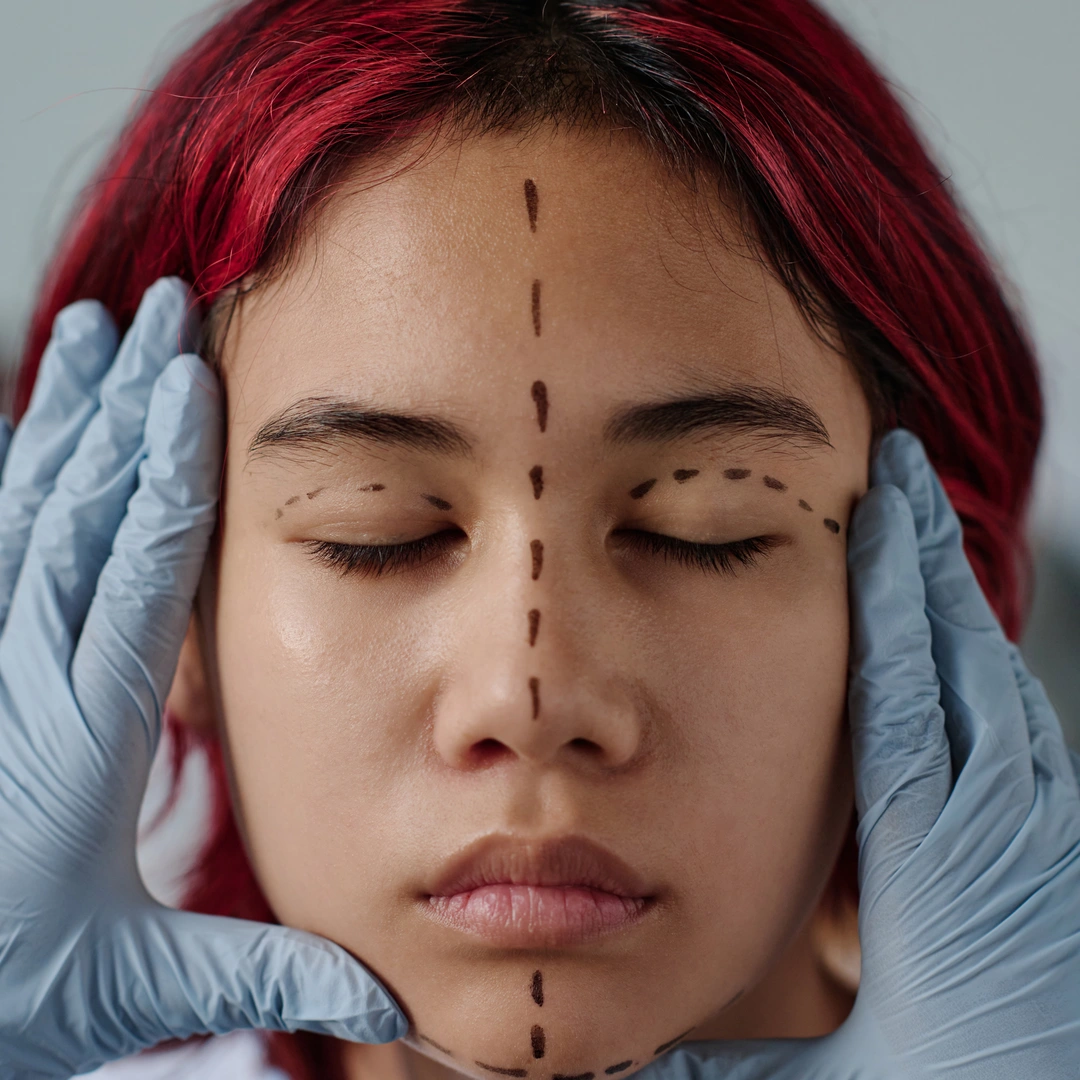 No human face is perfectly symmetrical.
One eyebrow may sit slightly higher, one cheek may have more volume, one side of the jaw may appear stronger, or the smile may pull more strongly to one side.
These differences can be caused by:
- Natural facial anatomy
- Genetics
- Ageing and volume loss
- Uneven muscle activity
- Dental or jaw alignment
- Previous injury
- Facial nerve conditions
- Previous surgery
- Changes in soft-tissue volume
- Differences in facial bone structure
In some people, the asymmetry is subtle and primarily aesthetic. In others, it can be more noticeable when smiling, speaking or making facial expressions.
A detailed consultation helps determine whether the asymmetry is primarily related to muscle, volume, soft tissue or underlying structure.
What Does Face Symmetrisation Treatment Involve?
Face Symmetrisation is not one standard procedure.
Your treatment plan is created around your individual facial anatomy and the specific areas that appear unbalanced.
Depending on your assessment, treatment may involve carefully targeted techniques such as:
Anti-Wrinkle Treatment
Where differences in muscle activity contribute to facial asymmetry, carefully placed anti-wrinkle injections may help reduce excessive muscle movement on one side.
This can be particularly useful when asymmetry becomes more noticeable during facial expressions.
Treatment may be considered for areas such as:
- Eyebrows
- Forehead
- Eyes
- Jaw muscles
- Chin
- Lower face
- Smile-related muscle imbalance
The objective is controlled muscle relaxation rather than excessive restriction of facial movement.
Dermal Filler
Where facial asymmetry is related to differences in soft-tissue volume, carefully placed dermal filler may help restore balance.
Small amounts may be used to improve:
- Cheek volume
- Chin projection
- Jawline definition
- Lip symmetry
- Facial contours
- Areas of volume deficiency
The goal is not simply to add volume, but to strategically place volume where it can improve overall facial proportions.
Combination Treatment
In some cases, asymmetry is caused by more than one factor.
For example, one side of the face may have greater muscle activity while the other side has less soft-tissue volume.
A combination approach may therefore provide a more balanced result.
Your practitioner will discuss the most appropriate treatment options following a detailed assessment.
Key Benefits
More Balanced Facial Proportions
Face Symmetrisation can help reduce the visual difference between the two sides of the face, creating a more harmonious appearance.
Natural-Looking Results
The objective is subtle refinement rather than making the face look completely different.
Personalised Treatment
Every face is different. Treatment is tailored to your individual anatomy, facial movement and aesthetic goals.
Improved Facial Harmony
Even small changes to facial proportions can influence how balanced the overall face appears.
Can Address Multiple Areas
Depending on the cause of asymmetry, treatment can be used to address several areas of the face as part of one personalised plan.
Preserves Your Natural Features
Our approach focuses on enhancing your existing facial structure rather than changing your identity or creating an over-treated appearance.
Non-Surgical Options Available
Where appropriate, facial asymmetry can sometimes be improved using non-surgical aesthetic treatments rather than surgery.
What Concerns Can Face Symmetrisation Help With?
Treatment may be considered for concerns including:
- Uneven eyebrows
- Uneven cheek volume
- Asymmetrical smile
- Uneven lips
- Chin asymmetry
- Jawline asymmetry
- Differences in facial volume
- Muscle-related facial imbalance
- Facial ageing-related asymmetry
- Mild facial drooping
- Facial imbalance following previous treatment
- Certain cases of facial palsy-related asymmetry
The suitability of treatment depends on the underlying cause and severity of the asymmetry.
Face Symmetrisation for Facial Ageing
As we age, facial asymmetry can sometimes become more noticeable.
Changes in collagen, skin elasticity, facial fat and muscle activity can affect each side of the face differently.
One cheek may lose more volume than the other. One side of the mouth may appear lower. The jawline may become more defined on one side than the other.
Rather than simply adding volume everywhere, a personalised symmetrisation approach aims to identify where the imbalance originates and make targeted corrections.
This can create a fresher and more harmonious appearance while maintaining natural facial movement.
Face Symmetrisation for Smile Asymmetry
A difference in the way the two sides of the mouth move can make the smile appear uneven.
This may be related to differences in muscle strength or activity, facial structure or previous facial nerve problems.
In selected cases, carefully targeted treatment can help reduce an imbalance in muscle activity and create a more harmonious smile.
However, not every cause of smile asymmetry can be corrected with aesthetic treatment.
A detailed assessment is important before deciding whether treatment is appropriate.
Face Symmetrisation for Jaw and Chin Imbalance
The chin and jaw have a significant influence on overall facial balance.
A small difference in chin position, jawline definition or muscle size can make the face appear asymmetrical.
Depending on the cause, carefully planned treatment may help improve the appearance of:
- Uneven chin projection
- Mild jawline asymmetry
- Unequal masseter muscle size
- Differences in lower-face volume
- Soft-tissue imbalance
Significant skeletal asymmetry may require assessment by an appropriate specialist, as injectable or non-surgical treatments cannot correct every structural cause of facial asymmetry.
How Is Your Face Assessed?
Before treatment, we carefully assess your facial proportions and movement.
Your consultation may include assessment of:
- Facial symmetry at rest
- Facial symmetry during movement
- Brow position
- Eye area
- Cheek volume
- Nose alignment
- Lip position
- Smile movement
- Chin position
- Jawline
- Muscle activity
- Overall facial proportions
Photographs may also be taken to help assess facial balance and monitor changes over time.
The assessment helps determine which areas may benefit from treatment and which differences are best left untreated.
Your Treatment Journey
Step 1 – Consultation
We begin with a detailed assessment of your facial structure, proportions and concerns.
We discuss what you would like to improve and whether your expectations are realistic and achievable.
Step 2 – Facial Assessment
Your practitioner assesses the face from different angles and, where appropriate, during facial expressions such as smiling or raising the eyebrows.
Step 3 – Personalised Treatment Plan
A treatment plan is created based on the specific cause of your asymmetry.
This may involve one treatment or a combination of techniques.
Step 4 – Treatment
Treatment is performed using carefully selected techniques and precise placement.
The focus is on making subtle adjustments rather than over-correcting the face.
Step 5 – Review
A follow-up may be recommended to assess the result and determine whether any further refinement is appropriate.
How Many Treatments Will I Need?
The number of treatments varies depending on the cause and degree of facial asymmetry.
Some patients may achieve their desired improvement following one treatment session, while others may benefit from a staged treatment plan.
Your practitioner will explain the recommended approach during your consultation.
For treatments involving anti-wrinkle injections or dermal fillers, maintenance may be required over time as their effects gradually change.
Downtime and Recovery
Downtime depends on the treatment used.
After non-surgical facial symmetrisation, you may experience:
- Mild redness
- Slight swelling
- Temporary tenderness
- Minor bruising
- Mild sensitivity
Most patients can return to normal activities relatively quickly, although this will depend on the treatment performed.
You will receive individual aftercare advice following your procedure.
Who Is Suitable?
Face Symmetrisation may be suitable if you:
- Notice differences between the two sides of your face
- Feel your smile is uneven
- Have uneven cheek or facial volume
- Have mild chin or jaw asymmetry
- Notice uneven muscle activity
- Want a more balanced facial appearance
- Prefer subtle, natural-looking improvements
- Want a personalised rather than one-size-fits-all treatment approach
A consultation is required to determine whether treatment is appropriate for you.
Who May Not Be Suitable?
Treatment may not be suitable if you:
- Have an active infection in the treatment area
- Have certain uncontrolled medical conditions
- Are pregnant or breastfeeding, depending on the treatment proposed
- Have unrealistic expectations
- Require correction of significant skeletal abnormalities
- Have an underlying medical or neurological cause that requires specialist assessment
- Are not medically suitable for the proposed treatment
If your facial asymmetry has developed suddenly or is associated with weakness, numbness, speech difficulties or other neurological symptoms, medical assessment should be sought rather than treating it as a purely aesthetic concern.
How Long Do Results Last?
The longevity of your result depends on the treatment used.
Anti-wrinkle treatments are temporary and gradually wear off as muscle activity returns.
Dermal fillers can provide longer-lasting volume correction, although their longevity varies depending on the product, treatment area and individual factors.
Your practitioner will explain the expected duration of your specific treatment during your consultation.
Frequently Asked Questions
Yes. Almost every face has some degree of natural asymmetry. The purpose of Face Symmetrisation is not to create perfect mathematical symmetry, but to improve noticeable imbalance and create greater facial harmony.
Not always. The result depends on the underlying cause. Soft-tissue and muscle-related differences may sometimes be improved significantly, while more pronounced skeletal asymmetry may require specialist surgical assessment.
Safety Disclaimer
Face Symmetrisation is a personalised medical-aesthetic treatment and is subject to consultation, assessment, suitability and informed consent.
All aesthetic treatments carry potential risks. Depending on the treatment selected, these may include redness, swelling, bruising, tenderness, infection, allergic reactions, temporary asymmetry, over- or under-correction and other treatment-specific complications.
Injectable treatments carry additional risks and should only be performed by an appropriately qualified and experienced practitioner.
Individual results vary depending on facial anatomy, age, skin quality, muscle activity, underlying structure, medical history and treatment response.
No treatment can guarantee perfect facial symmetry.
Following a recent consultation with Mr Salahuddin to discuss various aesthetic treatments, including ebrium laser, c02 laser and endolift. I had my first session of ebrium laser treatment today. I can honestly say Mr Salahuddin's approach is excellent! He was very informative and went into great detail about each treatment, whilst remaining courteous, honest and professional at all times. We worked out a plan 'together' and he helped with any concerns I had. I am excited to start my journey with him and I have more than 100% faith in his ability as a medical professional to give me the results I want to achieve. I would highly recommend Mr Salahuddin, his expertise is second to none.
Joan Loudon