
Advanced Treatment for Stretch Marks, Skin Texture and Skin Quality
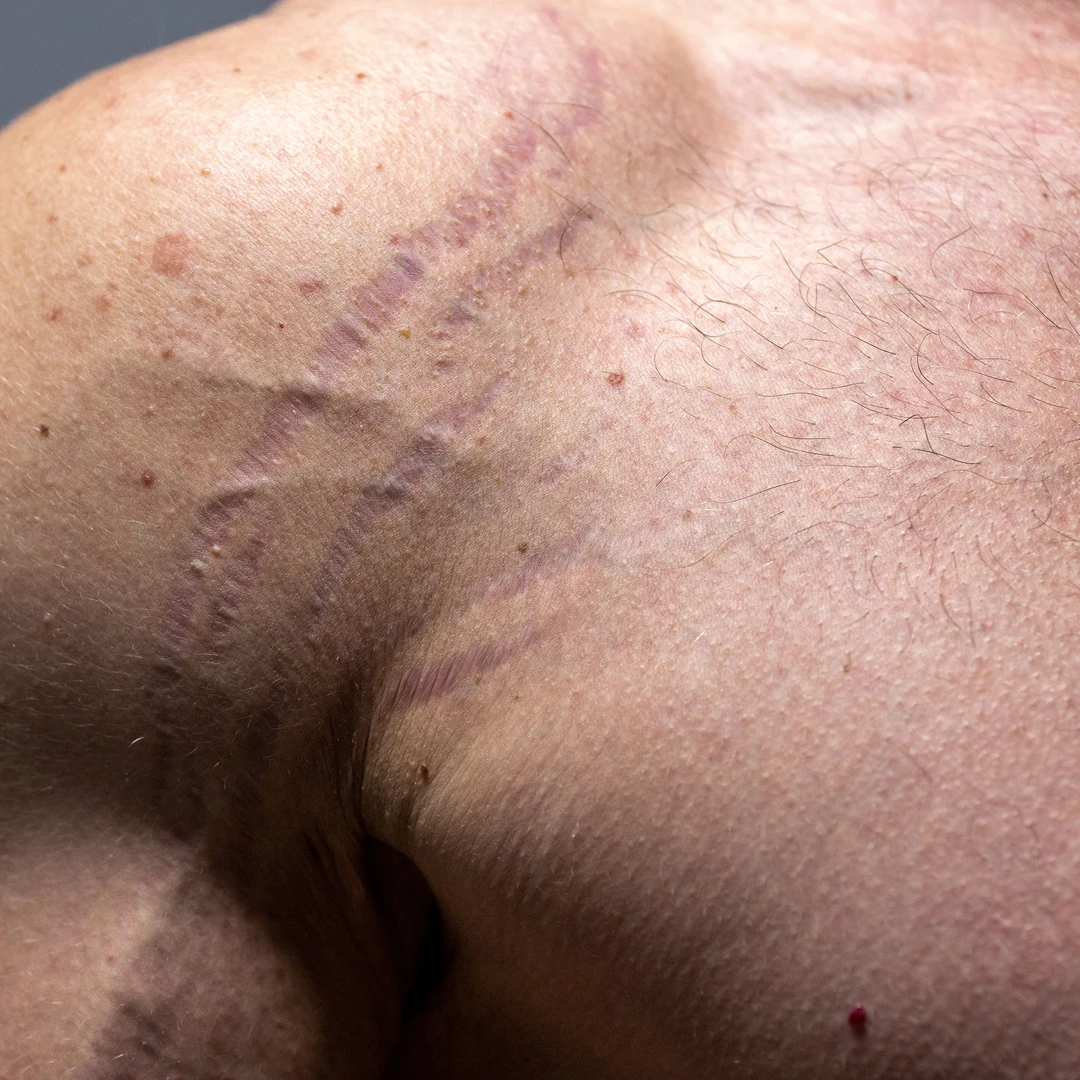
Stretch marks, also known as striae, are a common form of scarring that develop when the skin is stretched beyond its natural elasticity. They may appear after pregnancy, weight changes, puberty, bodybuilding, hormonal changes, or medical conditions affecting collagen and elastin.
At Skin & Scar Care Clinic, we offer a personalised, medical-grade approach to stretch mark treatment using advanced laser technology, regenerative treatments, biostimulators, and skin-remodelling techniques. Our aim is to improve the colour, texture, thickness, and overall quality of the affected skin, helping the stretch marks appear softer, smoother, and less visible.
Stretch marks cannot usually be removed completely, but with the correct combination of treatments, their appearance can often be significantly improved.
What Are Stretch Marks?
Stretch marks are a type of dermal scar caused by disruption of collagen and elastin fibres within the deeper layers of the skin.
They commonly appear as:
- Red, pink, purple, or inflamed lines in the early stage.
- White, silver, or pale lines in mature stretch marks.
- Depressed, thin, wrinkled, or crepey skin.
- Linear marks on the abdomen, thighs, hips, breasts, buttocks, arms, or back.
Fresh red stretch marks tend to respond better and faster to treatment, while older white stretch marks usually require a more intensive collagen-stimulation approach.
Treatments Offered for Stretch Marks
1. CO₂ Laser Resurfacing
CO₂ laser is one of the gold-standard treatments for mature, white, textured, or depressed stretch marks.
It works by creating controlled micro-injuries in the skin, stimulating wound healing, collagen production, and skin remodelling. This can help improve:
- Skin texture.
- Stretch mark depth.
- Skin thickness.
- Crepey or wrinkled appearance.
- Overall scar quality.
CO₂ laser is particularly useful for older stretch marks where the skin has become thin, pale, or atrophic.
2. Laser-Assisted Drug or Steroid Delivery
In selected cases, we may combine fractional laser treatment with laser-assisted drug delivery.
The laser creates microscopic channels in the skin, allowing carefully selected topical or injectable medical agents to penetrate more effectively into the treated area.
Depending on the appearance of the stretch marks, this may include:
- Steroid-based treatment for raised, inflamed, or resistant scar tissue.
- Regenerative serums.
- Collagen-stimulating agents.
- Skin-repair formulations.
This approach may improve the response in complex, resistant, or mixed scar patterns.
3. Erbium Glass Laser 1550nm
The 1550nm Erbium Glass laser is an excellent option for improving skin quality, collagen stimulation, and elastin support with minimal downtime compared with more aggressive resurfacing lasers.
It is particularly suitable for:
- Fine stretch marks.
- Early textural changes.
- Mild skin thinning.
- Patients wanting gradual improvement.
- Areas where downtime needs to be minimal.
Erbium Glass laser supports dermal remodelling and can help improve firmness, smoothness, and elasticity over a course of treatments.
4. DPL for Red or Purple Stretch Marks
For newer red, pink, or purple stretch marks, we may recommend Dynamic Pulse Light, also known as DPL.
DPL targets redness and visible vascular activity within early stretch marks. It can help reduce:
- Redness.
- Purple discolouration.
- Inflammation.
- Flushing within the scar.
- Early vascular changes.
This is most useful for newer stretch marks, particularly when they still have a red or inflamed appearance.
5. Biostimulators
Biostimulators are injectable treatments designed to encourage the skin to produce more collagen over time.
They may be recommended when stretch marks are associated with:
- Skin thinning.
- Loss of firmness.
- Crepey skin.
- Poor skin elasticity.
- Larger body areas requiring regenerative support.
Biostimulators do not fill stretch marks directly like a traditional filler. Instead, they work gradually by stimulating the skin’s own collagen response, helping to improve skin structure and firmness over several months.
6. Bioremodelling Agents
Bioremodelling treatments, such as injectable skin boosters and hyaluronic-acid-based remodelling agents, may be used to improve skin hydration, elasticity, and overall quality.
These treatments may help improve:
- Skin texture.
- Hydration.
- Elasticity.
- Crepey skin.
- Skin smoothness.
- Overall skin quality around stretch marks.
They are often used alongside laser treatments to enhance skin recovery and improve the final result.
Ideal Candidates for Stretch Mark Treatment
 Stretch mark treatment may be suitable for patients with:
- Red, pink, purple, white, or silver stretch marks.
- Stretch marks after pregnancy.
- Stretch marks following weight gain or weight loss.
- Stretch marks from puberty or growth spurts.
- Stretch marks on the abdomen, breasts, hips, thighs, buttocks, arms, or back.
- Crepey or thin skin associated with stretch marks.
- Textural skin irregularity.
- Realistic expectations about improvement rather than complete removal.
Who May Not Be Suitable
Treatment may not be suitable, or may need to be delayed, if you have:
- Active infection in the treatment area.
- Active eczema, psoriasis, or dermatitis flare-up.
- Recent sunburn or heavy tanning.
- Pregnancy or breastfeeding, depending on treatment type.
- Poorly controlled diabetes.
- History of poor wound healing.
- Active keloid tendency.
- Recent isotretinoin use, depending on treatment type and medical assessment.
- Unrealistic expectations of complete stretch mark removal.
- Very dark or recently tanned skin for certain energy-based treatments, unless assessed and treated with appropriate settings.
- A full consultation is required to determine suitability and the safest treatment plan.
Limitations of Stretch Mark Treatment
It is important to understand that stretch marks are a form of scarring within the deeper layers of the skin. Therefore, they cannot usually be erased completely.
Treatment aims to improve:
- Colour.
- Texture.
- Skin thickness.
- Skin quality.
- Elasticity.
- Visibility of stretch marks.
- Confidence in the treated area.
Results vary depending on:
- Age of the stretch marks.
- Colour of the stretch marks.
- Depth and width.
- Skin type.
- Skin quality.
- Hormonal factors.
- Area treated.
- Number of sessions completed.
- Aftercare compliance.
White stretch marks usually require more sessions than red stretch marks. Mature stretch marks may improve gradually over months as collagen develops.
Combination Treatments
For best results, we often recommend a combination treatment approach.
Possible combinations include:
Red Stretch Marks
- DPL to reduce redness.
- Erbium Glass laser for collagen and elastin support.
- Bioremodelling agents for skin quality.
White or Silver Stretch Marks
- CO₂ laser resurfacing.
- Erbium Glass laser for collagen stimulation.
- Biostimulators for deeper dermal support.
- Bioremodelling agents for hydration and elasticity.
Crepey or Loose Skin with Stretch Marks
- CO₂ laser for resurfacing.
- Erbium Glass laser for elastin and skin texture.
- Biostimulators for collagen production.
- Skin boosters or bioremodelling treatments for hydration and firmness.
Resistant or Complex Stretch Marks
- CO₂ laser.
- Laser-assisted drug delivery.
- Biostimulators.
- Maintenance laser treatments.
Your Treatment Journey
1. Consultation and Skin Assessment
Your journey begins with a detailed consultation. We assess:
- Type of stretch marks.
- Colour and maturity.
- Skin thickness.
- Skin laxity.
- Medical history.
- Previous treatments.
- Skin type and pigmentation risk.
- Your expectations and goals.
2. Personalised Treatment Plan
Following assessment, we create a bespoke plan. This may include one treatment or a combination of laser, injectable, and regenerative options. We will explain:
- Recommended treatments.
- Number of sessions.
- Expected downtime.
- Risks and limitations.
- Aftercare.
- Cost and package options.
3. Treatment Sessions
Treatment time depends on the size of the area. Small areas may take 20–30 minutes, while larger areas such as abdomen, thighs, or buttocks may require longer appointments. A topical numbing cream may be applied before certain treatments to improve comfort.
4. Healing and Recovery
Downtime varies depending on the treatment. You may experience:
- Redness.
- Warmth.
- Mild swelling.
- Dryness.
- Darkening or bronzing of the treated area.
- Temporary roughness or flaking.
- Mild tenderness.
5. Review and Maintenance
Results develop gradually. Collagen and elastin remodelling can continue for several months after treatment.
Maintenance sessions may be recommended depending on your skin condition, lifestyle, and treatment response.
Results You Can Expect
Stretch mark treatment can help improve:
- Redness in newer stretch marks.
- White or silver appearance in mature stretch marks.
- Skin texture.
- Crepey skin.
- Skin firmness.
- Skin smoothness.
- Stretch mark depth.
- Overall visibility.
Most patients require a course of treatments rather than a single session.
Typical improvement is gradual and progressive. The aim is to make stretch marks less noticeable and improve the surrounding skin quality, rather than guarantee complete removal.
Key Benefits
- Medical-grade treatment options.
- Personalised treatment plans.
- Suitable for red and white stretch marks.
- Improves skin texture and tone.
- Stimulates collagen and elastin.
- Can be combined with regenerative injectables.
- Helps improve skin quality and confidence.
- Options available for different skin types and treatment goals.
- Non-surgical approach.
- Can treat multiple body areas.
Aftercare Advice
After treatment, you may be advised to:
- Avoid sun exposure and tanning beds.
- Use high-factor SPF on exposed areas.
- Keep the area clean and moisturised.
- Avoid hot baths, saunas, steam rooms, and intense exercise for 24–72 hours, depending on treatment type.
- Avoid picking, scratching, or rubbing the treated skin.
- Avoid active skincare ingredients such as retinoids or acids until advised.
- Follow any prescribed creams or post-laser skincare.
- Stay well hydrated.
- Attend all recommended review appointments.
- Avoid fake tan before and after laser treatment until fully healed.
For CO₂ laser, more specific aftercare instructions will be provided, including wound care, moisturising, sun avoidance, and infection prevention.
Treatment Summary
| Treatment | Best For | Typical Course | Downtime |
| CO₂ Laser | Mature white stretch marks, texture, skin thinning | 1-4 sessions | Moderate |
| Erbium Glass 1550nm | Skin quality, elastin, mild texture, minimal downtime | 3-6 sessions | Mild |
| DPL | Red, pink, purple stretch marks | 3-6 sessions | Minimal to mild |
| Laser-Assisted Drug Delivery | Resistant or complex stretch marks | Case-dependent | Mild to moderate |
| Biostimulators | Skin thinning, laxity, collagen loss | 1-3 sessions | Mild |
| Bioremodelling Agents | Hydration, elasticity, crepey skin | 2-4 sessions | Minimal to mild |
Treatment frequency and number of sessions vary depending on the individual assessment.
Frequently Asked Questions
Disclaimer
Stretch mark treatment is designed to improve the appearance of stretch marks, skin texture, colour, and skin quality. Complete removal cannot be guaranteed.
Results vary between individuals and depend on factors including age, skin type, stretch mark maturity, hormonal influences, lifestyle, medical history, number of sessions, and aftercare compliance.
A consultation is required before treatment to assess suitability, risks, expected outcomes, and the most appropriate treatment plan. Maintenance treatments may be required to preserve and optimise results.
Skin & Scar Care Clinic provides medical-grade treatments with a focus on safety, expertise, and patient satisfaction; however, no specific outcome or percentage improvement can be guaranteed.
Following a recent consultation with Mr Salahuddin to discuss various aesthetic treatments, including ebrium laser, c02 laser and endolift. I had my first session of ebrium laser treatment today. I can honestly say Mr Salahuddin's approach is excellent! He was very informative and went into great detail about each treatment, whilst remaining courteous, honest and professional at all times. We worked out a plan 'together' and he helped with any concerns I had. I am excited to start my journey with him and I have more than 100% faith in his ability as a medical professional to give me the results I want to achieve. I would highly recommend Mr Salahuddin, his expertise is second to none.
Joan Loudon